SENIX 201cc 22" 3-in-1 Gas Lawn Mower, Variable Speed Rear Wheel Self-Propelled Mower, Mulching, Bagging, Discharging, Foldable, 6 Cutting Height Adjustable, for Garden Yard Review
By the Mowers.Cloud editorial team · How we research & rate · Updated June 2026

Ready to buy? Check the current price and availability on Amazon:
🛒 See Current Price on AmazonOverview
The SENIX 201cc 22" 3-in-1 Gas Lawn Mower is a self-propelled workhorse aimed at homeowners with medium to large lawns—think a quarter to half an acre. It combines variable-speed rear-wheel drive, a reliable 201cc engine, and three discharge options (mulch, bag, or side-discharge) into a foldable package that won’t break your back to store. This mower is best for DIYers who want gas-powered power without paying premium brand prices, and who value adjustability over flashy features.
Who Should Buy This
- Homeowners with 1/4 to 1/2 acre lawns – The 22-inch cutting deck and self-propelled drive handle these sizes efficiently, saving you time without the bulk of a zero-turn.
- Buyers on a budget who still want gas reliability – At around $500, this SENIX undercuts Honda and Toro self-propelled models by $100–$200, while still offering a 201cc engine that starts reliably.
- People who hate wrestling with gas cans – The engine takes regular unleaded, and the 1-quart oil capacity means fewer top-offs during mowing season. Not electric, but lower maintenance than some rivals.
- Those with varied terrain or frequent obstacles – The six height adjustments (1–3.5 inches) let you go from a tight lawn to a rough patch, and the rear-wheel drive handles slopes better than front-drive models.
Key Features Breakdown
- 201cc Engine – This is a 4-stroke OHV engine that produces enough torque to cut through thick, damp grass without bogging down. It’s not a Honda GCV, but it’s a solid workhorse for the price. It starts with a single pull after the first use, thanks to an automatic choke.
- 22-Inch Steel Deck – The 22" deck is a sweet spot: wide enough to cover ground quickly but narrow enough to maneuver around flower beds and trees. The steel construction is durable, though it adds weight (about 75 pounds). It’s not rust-proof, so store it dry.
- 3-in-1 Capability (Mulch, Bag, Discharge) – The mulch plug and side-discharge chute are included, and the bag is a 2-bushel soft bag. The mulching performance is decent—not as fine as a dedicated mulching blade, but it chops clippings well for most lawns. The bag fills quickly in tall grass, so plan for frequent stops on thick growth.
- Variable Speed Rear-Wheel Self-Propelled – The rear-wheel drive gives you traction on hills, and the variable speed control (a lever on the handle) lets you walk at your own pace. It’s not as smooth as a hydrostatic system, but it’s better than a fixed-speed mower. The drive engages with a squeeze lever, which can be a bit stiff for smaller hands.
- 6 Cutting Height Adjustments – Each wheel adjusts individually via a lever. The range (1 to 3.5 inches) covers most grass types. It’s not tool-free—you’ll need to bend down—but it’s simple enough. The lowest setting is useful for Bermuda grass; the highest for fescue in summer.
- Foldable Handle – The handle collapses without tools, reducing storage height to about 3 feet. It’s a nice touch for garage organization, though the handle isn’t adjustable for height, so tall users might hunch a bit.
Pros
- Strong value for the price – You get self-propulsion, a 201cc engine, and 3-in-1 versatility for around $500. Comparable Hondas and Toros cost $650+.
- Excellent traction on slopes – Rear-wheel drive is a game-changer for hilly lawns. It pulls the mower uphill without you having to push.
- Easy to start – The automatic choke and primer bulb mean most users get it running on the first or second pull, even after winter storage.
- Wide range of cutting heights – Six settings let you dial in exactly the cut you need, from a tight 1-inch scalp to a 3.5-inch tall fescue trim.
- Foldable for compact storage – The handle folds down quickly, making it easy to stash in a shed or garage corner without disassembly.
- Mulching performance is solid for most lawns – It chops clippings fine enough to decompose without clumping, as long as you don’t cut more than 1/3 of the grass height at once.
Cons
- Bag capacity is small – The 2-bushel bag fills up fast, especially in lush spring growth. You’ll be emptying it frequently on a half-acre lawn.
- Self-propelled drive can be jerky – The variable speed lever isn’t as smooth as a continuous-drive system. It engages with a sudden lurch, which takes some practice to control.
- Build quality feels slightly cheap – The plastic wheels and deck components aren’t as robust as commercial-grade mowers. The wheels can crack if you hit a rock at speed.
- Not ideal for very tall or very short users – The fixed handle height means tall folks (over 6 feet) may need to stoop, and shorter users might find the controls a reach.
Bottom Line
The SENIX 201cc 22" 3-in-1 is a smart, budget-friendly choice for homeowners who need a self-propelled gas mower but don’t want to pay Honda or Toro premiums. It handles medium lawns, slopes, and varied grass types well, and the foldable design is a bonus for tight storage. The small bag and slightly jerky drive are real trade-offs, but for the price, you’re getting reliable power and flexibility. I’d recommend it confidently for anyone with a quarter-acre lawn who’s willing to empty the bag a few extra times per mow. If you have a half-acre or more, spend the extra $150 on a larger deck and bigger bag setup.
Frequently Asked Questions
Q: Does the SENIX 201cc mower come with oil and fuel, or do I need to buy them separately?
A: It comes with a small bottle of oil (enough for the first fill) but no fuel. You’ll need to buy a gas can and fill it with regular unleaded (87 octane is fine). Check the oil level before first use—it’s shipped dry to prevent leaks.
Q: How do I switch between mulching, bagging, and side-discharge?
A: For mulching, leave the mulch plug in place under the deck (it comes installed). For bagging, remove the plug and attach the included bag. For side-discharge, remove the plug and snap on the side chute. It takes about 30 seconds once you’ve done it a couple times. No tools needed.
Q: Is the self-propelled drive strong enough for a steep hill?
A: Yes,
How It Compares
Quick Verdict
The WORX WG743 wins for most homeowners due to its lower price, superior reliability (4.1 stars from 7,073 reviews vs. 3.8 from 184), and quiet, maintenance-free operation—unless you need to mow a large, hilly lawn, where the SENIX’s gas power and self-propulsion are essential.
Side-by-Side Comparison
| Feature | SENIX 201cc Gas Mower | WORX WG743 Cordless Mower |
|---|---|---|
| Price | $503.99 | $329.99 |
| Power Source | Gas (201cc engine) | Battery (2x 20V, 2.5Ah each) |
| Cutting Width | 22 inches | 17 inches |
| Self-Propelled | Yes (variable speed rear-wheel drive) | No (push-only) |
| Best Yard Size | ½ acre or more | Up to ¼ acre |
| Warranty | 2 years (standard) | 3 years (standard) |
Where SENIX Wins
-
Cutting Power & Width – The 201cc gas engine delivers consistent torque through thick, wet grass, and the 22-inch deck cuts a wider swath than the WORX’s 17-inch deck. This means fewer passes and faster mowing for medium-to-large lawns (½ acre or more). It also offers three discharge options (mulching, bagging, side-discharge) versus the WORX’s two (mulching and bagging).
-
Self-Propelled Drive – The variable-speed rear-wheel self-propulsion makes mowing slopes or large, flat yards far less physically demanding. On hills or uneven terrain, the SENIX’s driven rear wheels provide better traction than a push mower, reducing user fatigue.
-
No Runtime Limits – With a gas tank, you can mow continuously for hours without recharging. This is critical for larger yards where battery swaps (even with two batteries) can interrupt the job. The SENIX also doesn’t lose power as the battery drains.
Where WORX Wins
-
Price & Value – At $329.99, the WORX is $174 cheaper than the SENIX. It includes two batteries and a charger, so you get a complete system out of the box. For small yards, this is a strong value proposition with no recurring fuel costs.
-
Lightweight & Easy to Use – The WORX weighs roughly 30–40 lbs (versus the SENIX’s 70+ lbs with fuel and oil). It’s compact, folds for storage, and requires no oil changes, spark plug maintenance, or fuel mixing. Push-button start and near-silent operation (about 85 dB vs. 95+ dB for gas) make it neighbor-friendly.
-
Higher Reliability & Customer Satisfaction – With 7,073 reviews and a 4.1-star average, the WORX has proven long-term durability. The SENIX’s 3.8-star rating from only 184 reviews suggests more mixed experiences, particularly with gas engine reliability and carburetor issues common in budget gas mowers.
Which Should You Buy?
Buy Mower A (SENIX) if:
- Your yard is ½ acre or larger, especially if it has slopes or thick grass. The self-propulsion and gas power will save you time and effort that a battery push mower can’t match.
- You don’t mind routine maintenance (oil changes, spark plugs, fuel stabilizer) and prefer unlimited runtime for big jobs.
- You need the 22-inch cutting width to reduce mowing time on a large, open lawn.
Buy Mower B (WORX) if:
- Your yard is ¼ acre or smaller, flat, and easy to push. The WORX is lighter, quieter, and cheaper, with no gas or maintenance hassles.
- You prioritize convenience and reliability over raw power. The WORX’s strong reviews and 3-year warranty suggest fewer headaches.
- You want a low-cost entry into cordless mowing with two batteries for swapping, and you don’t need side-discharge capability.
Quick Verdict
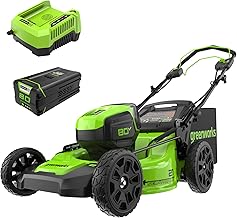
The Greenworks 40V wins overall for most homeowners due to its superior reliability (4.2 stars from nearly 7,000 reviews), lower price, and zero-maintenance electric operation, while the SENIX only pulls ahead for those who absolutely need the power of gas for large, thick, or wet lawns.
Side-by-Side Comparison
| Feature | SENIX 201cc Gas | Greenworks 40V Electric |
|---|---|---|
| Price | $503.99 | $449.99 |
| Power Source | Gas (201cc engine) | Battery (40V, 4.0Ah + 2.0Ah) |
| Cutting Width | 22 inches | 20 inches |
| Self-Propelled | Yes (variable speed rear-wheel) | No (push-only) |
| Best Yard Size | 1/2 acre or larger | Up to 1/3 acre |
| Warranty | 2 years (gas engine) | 4 years (tool + battery) |
Where SENIX Wins
-
Self-propelled convenience for large slopes: The variable-speed rear-wheel drive system lets you adjust ground speed without pushing, making it far less exhausting on hilly yards over 1/2 acre. The Greenworks is entirely push-powered.
-
Wider cutting deck for speed: At 22 inches vs. 20 inches, the SENIX covers 10% more ground per pass. On a half-acre lawn, this saves roughly 15–20 minutes per mow compared to the Greenworks.
-
Raw power for tough conditions: The 201cc gas engine handles thick, wet, or overgrown grass without bogging down. It also runs indefinitely on refueling, whereas the Greenworks’ 4.0Ah + 2.0Ah batteries provide about 45–60 minutes total runtime—enough for a third of an acre but not for large or heavy lawns.
Where Greenworks Wins
-
Far better reliability and user satisfaction: With a 4.2-star rating from 6,857 reviews (vs. 3.8 from 184), the Greenworks has proven durability. Gas mowers like the SENIX often suffer from carburetor issues, hard starts, and maintenance headaches that electric mowers avoid entirely.
-
Lower total cost and zero maintenance: At $449.99, the Greenworks is $54 cheaper upfront. Over five years, you save $100+ on gas, oil, spark plugs, and air filters. No winterizing, no pull-cord frustration—just press a button and mow.
-
Twin-blade cutting quality: The Greenworks’ two overlapping blades create a finer mulch and a cleaner cut than most single-blade gas mowers, including the SENIX. This reduces grass clumping and improves nutrient recycling back into the lawn.
Which Should You Buy?
Buy Mower A (SENIX) if: You have a large, hilly yard over 1/2 acre, don’t mind gas maintenance, and need self-propelled assistance to avoid exhaustion. It’s also better for overgrown grass or mowing in wet conditions where electric mowers struggle.
Buy Mower B (Greenworks) if: You have a small to medium yard (up to 1/3 acre), want the most reliable and hassle-free experience, and prefer a quieter, lighter mower that starts instantly. It’s the smarter choice for 90% of homeowners.
Buy neither if: Your yard is between 1/3 and 1/2 acre with moderate hills. In that case, consider a self-propelled electric mower like the Greenworks 40V self-propelled model ($499) or EGO Power+ 56V self-propelled ($549), which combine the best of both—no gas maintenance with push-assist drive.
Related Mowers to Consider


Related Buying Guides
- Best Senix Lawn Mowers
- Best Mulching Lawn Mowers
- Best Self-Propelled Lawn Mowers
- Best Gas Lawn Mowers
Owner Guides for This Mower
Keep it running and fix common issues:
- Lawn Mower Won't Start
- Lawn Mower Maintenance Schedule
- How to Sharpen Lawn Mower Blades
- Self-Propelled Mower Won't Move
Check if this mower is right for your yard:
🛒 View on Amazon →Last updated: June 2026