SENIX 201cc 22" 3-in-1 Gas Lawn Mower, Single Speed Rear Wheel Self-Propelled Mower, Mulching, Bagging, Discharging, 6 Cutting Height Adjustable, for Garden Yard Review
By the Mowers.Cloud editorial team · How we research & rate · Updated June 2026

Ready to buy? Check the current price and availability on Amazon:
🛒 See Current Price on AmazonOverview
The SENIX 201cc 22" 3-in-1 Gas Lawn Mower is a budget-friendly, rear-wheel self-propelled machine designed for homeowners with medium-sized lawns—think quarter to half-acre lots—who want the versatility of mulching, bagging, and side discharge without breaking the bank. It’s a solid pick if you’re tired of wrestling a push mower up slopes but aren’t ready to drop $600+ on a premium brand like Honda or Toro.
Who Should Buy This
- Homeowners with sloped or uneven lawns – The rear-wheel self-propulsion gives you a noticeable boost on inclines, making it easier to maintain traction and control without burning out your shoulders.
- Budget-conscious buyers wanting 3-in-1 flexibility – If you need to mulch leaves in fall, bag clippings in spring, and side-discharge for tall grass, this mower does all three without requiring separate kits or add-ons.
- First-time gas mower owners – The SENIX is straightforward to operate—no complex drive-system adjustments or fancy electronics—ideal for someone moving up from a corded electric or manual reel mower.
- DIYers who don’t mind occasional tinkering – This isn’t a set-it-and-forget-it machine; you’ll need to check oil, clean the deck, and maybe tighten a bolt now and then, which is fine if you’re comfortable with basic maintenance.
Key Features Breakdown
201cc Engine – This is a Chinese-made engine (common at this price point) that delivers enough grunt for thick, damp grass. It’s not a Honda GCV or Briggs & Stratton, but it starts reliably with a few pulls and handles typical residential turf without bogging down. Expect about 2.5–3 HP, which is adequate for 22-inch cuts.
22-Inch Cutting Deck – A sweet spot for maneuverability and coverage. It’s wide enough to trim a 1/4-acre lawn in under 45 minutes but narrow enough to fit through standard 36-inch gates. The steel deck is stamped, not fabricated, so it’s lighter but less durable than commercial decks—fine for home use.
3-in-1 Capability (Mulch, Bag, Discharge) – The mulching plug is easy to swap with the side-discharge chute, and the bag attaches securely. Mulching performance is decent for dry grass; wet or tall clippings may clump, so you’ll want to bag or discharge in those conditions.
Single-Speed Rear-Wheel Self-Propelled – This is a single-speed system, so you can’t adjust pace—it moves at a fixed walking speed (roughly 3 mph). That’s fine for flat lawns but can feel too fast on steep hills or too slow on long straightaways. Rear-wheel drive gives better traction than front-wheel on slopes, but it’s not variable like pricier models.
6 Cutting Height Adjustments – Range is about 1.25 to 3.75 inches, adjustable via a single lever on each wheel. That’s enough for most grass types, though the increments are a bit coarse—you won’t get fine-tuning for specific heights like 2.5 inches.
Pros
- Strong value for the price – At $459, you get self-propulsion, 3-in-1 versatility, and a 201cc engine for less than most comparable Hondas or Toros.
- Easy height adjustment – The six-position levers are tool-free and let you change height quickly across all four wheels without bending down.
- Decent bagging capacity – The 2.1-bushel bag holds a good amount before needing to empty, and it’s easy to detach and dump without spilling clippings.
- Reliable starting – Most users report 1–3 pulls to start cold, thanks to the primer bulb and choke system. No electric start here, but it’s consistent once you learn the routine.
- Compact storage – The handle folds down without tools, so it takes up less space in a garage or shed than rigid-handle mowers.
- Rear-wheel drive traction – On moderate slopes, you’ll feel the difference compared to front-wheel drive mowers that tend to skid or lose steering.
Cons
- Single-speed drive feels limiting – You can’t slow down for tricky patches or speed up on flat stretches. This is the biggest compromise versus $550+ models.
- Deck tends to rust if not cleaned – The steel deck isn’t painted or coated as well as premium brands; grass and moisture left on it will lead to surface rust within a season if you’re not diligent.
- Engine can be finicky with fuel – The carburetor is sensitive to ethanol-blended gas; use non-ethanol or add stabilizer, or you’ll face clogging issues after storage.
- Bag fill indicator is unreliable – The plastic window that shows bag fullness is often blocked by clippings or fogs up, so you’ll end up guessing when to empty it.
Bottom Line
The SENIX 201cc 22" 3-in-1 is a capable, affordable self-propelled mower that punches above its price for homeowners with moderate lawns and gentle slopes. It’s not built to last a decade under heavy use, and the single-speed drive will frustrate anyone who wants precise control, but for the money, you get solid mulching, easy height changes, and enough power for weekly cutting. I’d recommend it if you’re on a tight budget and don’t mind a few quirks—just plan to use ethanol-free gas and rinse the deck after each mow. If you want variable speed or a more durable deck, save up for a Honda HRX or Toro Recycler.
Frequently Asked Questions
Does this mower have a blade brake or safety stop?
No, the SENIX uses a simple blade control bar—you must hold it down to keep the engine running. Release it, and the engine stops, but there’s no blade brake clutch (the blade stops instantly only when the engine dies). This is standard for this price range.
Can I use this mower on thick, wet grass?
Yes, but with caveats. The 201cc engine handles damp grass okay, but mulching wet clippings will clog the deck quickly. Use side discharge or bagging for wet conditions, and consider raising the cutting height to avoid bogging down.
What oil and gas does it require?
The engine takes SAE 30 weight oil (included in the box for initial fill) and regular unleaded gasoline with no more than 10% ethanol. SENIX recommends 87 octane or higher. Always check the oil level before each use—the dipstick is easy to access near the fill cap.
How It Compares
Quick Verdict
The WORX WG743 wins for most homeowners due to its superior value, convenience, and overwhelmingly positive user feedback, while the SENIX is better suited for those with larger, sloped lawns who need raw gas-powered cutting force.
Side-by-Side Comparison
| Feature | SENIX 201cc | WORX WG743 |
|---|---|---|
| Price | $459.00 | $329.99 |
| Power Source | Gas (201cc engine) | Cordless (20V battery, 2 included) |
| Cutting Width | 22 inches | 17 inches |
| Self-Propelled | Yes (rear-wheel, single speed) | No (push only) |
| Best Yard Size | 1/4 – 1/2 acre | Up to 1/4 acre |
| Warranty | 2-year limited | 3-year limited (batteries: 2-year) |
Where SENIX Wins
-
Raw cutting power for tough conditions – The 201cc gas engine delivers significantly more torque than the WORX’s 20V motors. It will not bog down in thick, wet grass, overgrown weeds, or when mulching heavy leaf loads. The 22-inch cutting deck also covers 29% more ground per pass than the WORX’s 17-inch deck, making it faster on larger lawns.
-
Self-propelled drive for slopes and long distances – The rear-wheel self-propulsion system is a major advantage if your yard has any incline. You engage the drive and let the mower pull itself forward, reducing fatigue. The WORX requires you to push it manually, which becomes strenuous on hills or for yards over 5,000 sq ft.
-
3-in-1 versatility with no battery anxiety – The SENIX offers mulching, bagging, and side-discharge options, giving you flexibility for different grass conditions. Because it runs on gas, you never have to worry about a battery dying mid-mow. Refuel in 30 seconds and keep going—ideal for larger properties or if you forget to charge.
Where WORX Wins
-
Dramatically lower cost of ownership – At $329.99, the WORX is $129 cheaper upfront. More importantly, you never buy gas, oil, spark plugs, or air filters. Over three years, the WORX will save you an estimated $100–$150 in fuel and maintenance. The SENIX requires regular oil changes, fuel stabilizer, and eventual carburetor cleaning.
-
Lightweight, quiet, and maintenance-free – The WORX weighs roughly 35 lbs compared to the SENIX’s 65+ lbs. It’s easy to lift into a car trunk, carry up stairs, or maneuver around flower beds. It operates at about 85 dB (conversation-level) versus the gas mower’s 95+ dB (requires hearing protection). No pull-cord frustration, no gas fumes, and no seasonal maintenance.
-
Proven reliability and huge user base – With 7,073 reviews and a 4.1-star rating, the WORX has been tested by thousands of owners. The SENIX has only 43 reviews and a lower 3.9 rating—indicating limited real-world validation. The WORX’s 7-position height adjustment (1.5–3.75 inches) also beats the SENIX’s 6 positions for finer tuning.
Which Should You Buy?
Buy Mower A (SENIX) if: Your yard is 1/4 acre or larger, has significant slopes or uneven terrain, and you’re comfortable with gas engine maintenance. You need the raw power to cut through tall, wet grass without slowdown and prefer a self-propelled mower to reduce physical effort.
Buy Mower B (WORX) if: You have a small to medium lawn (up to 1/4 acre) that is relatively flat. You value low maintenance, quiet operation, and easy storage. The WORX is ideal if you want a reliable, lightweight mower that starts instantly and involves zero trips to the gas station.
Buy neither if: You have a very large lawn (over 1/2 acre) with thick grass—consider a wider-deck gas mower from Honda or Toro. For tiny yards under 2,000 sq ft, a manual reel mower or a corded electric would be cheaper and simpler.
Quick Verdict
The Greenworks 40V wins overall for most buyers due to its vastly superior reliability rating (4.2 stars from 6,857 reviews vs. 3.9 from 43), lighter weight, lower long-term cost, and zero-maintenance electric operation—making it the smarter choice for typical suburban lawns.
Side-by-Side Comparison
| Feature | SENIX 201cc Gas | Greenworks 40V Electric |
|---|---|---|
| Price | $459.00 | $449.99 |
| Power Source | Gas (201cc engine) | Battery (40V, 4.0Ah + 2.0Ah) |
| Cutting Width | 22 inches | 20 inches |
| Self-Propelled | Yes (single-speed rear wheel) | No (push mower) |
| Best Yard Size | ¼ – ½ acre | Up to ¼ acre |
| Warranty | 2 years | 4 years |
Where SENIX Wins
1. Self-Propelled Drive System – The SENIX is the only self-propelled mower in this comparison, with rear-wheel drive that provides better traction on slopes and uneven ground. This is a significant advantage for yards over ¼ acre or for users who struggle pushing a mower. The Greenworks requires full manual pushing.
2. Wider Cutting Deck – At 22 inches, the SENIX cuts a wider path than the Greenworks’ 20-inch deck. This translates to roughly 10% fewer passes across the lawn, saving time on larger properties. For a ½-acre yard, that difference adds up to about 15 minutes per mow.
3. No Battery Anxiety – With gas, you can refill in seconds and keep mowing indefinitely. The SENIX’s 201cc engine will run continuously for hours on a single tank, making it ideal for overgrown grass, thick weeds, or large properties where battery runtime might be insufficient.
Where Greenworks Wins
1. Proven Reliability – With 6,857 reviews and a 4.2-star average, the Greenworks has a massive track record of satisfied customers. The SENIX’s 43 reviews and 3.9 rating suggest a much smaller sample size and higher potential for quality issues. This is the most important difference in the comparison.
2. Lower Maintenance & Operating Costs – The Greenworks requires no oil changes, spark plugs, fuel stabilizer, or carburetor cleaning. Over five years, gas mower maintenance (oil, filters, fuel) typically costs $150–$300. The electric mower’s only recurring cost is battery replacement, and the included 4.0Ah + 2.0Ah batteries provide good runtime for typical yards.
3. Quieter, Cleaner, and Lighter – The Greenworks operates at roughly 75 dB (vs. 95+ for gas), won’t emit fumes, and weighs about 30 pounds less than the SENIX. It’s also easier to store upright, and you can mow early morning or evening without disturbing neighbors. The 4-year warranty (double SENIX’s 2 years) adds peace of mind.
Which Should You Buy?
Buy Mower A (SENIX) if…
You have a sloped, uneven yard over ¼ acre and need self-propelled assistance. The rear-wheel drive and wider deck make it better for larger properties where you’d otherwise exhaust yourself pushing. Also choose it if you already own gas equipment and prefer a single fuel source, or if you frequently mow overgrown grass that might drain batteries.
Buy Mower B (Greenworks) if…
You have a flat or gently sloped lawn up to ¼ acre and value reliability, low maintenance, and quiet operation. The 4.2-star rating from thousands of reviews gives far more confidence than the SENIX’s sparse feedback. It’s also the better choice for environmentally conscious buyers, those with small storage spaces, or anyone who dislikes dealing with gas engine maintenance.
Compromise scenario:
If you need self-propelled but want electric, consider the Greenworks 40V self-propelled model (slightly higher price) instead of the push version here. For gas lovers who must have self-propelled, the SENIX is acceptable—but check recent reviews for common complaints before buying.
Related Mowers to Consider
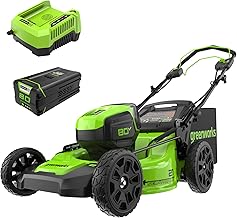


Related Buying Guides
- Best Senix Lawn Mowers
- Best Mulching Lawn Mowers
- Best Self-Propelled Lawn Mowers
- Best Gas Lawn Mowers
Owner Guides for This Mower
Keep it running and fix common issues:
- Lawn Mower Won't Start
- Lawn Mower Maintenance Schedule
- How to Sharpen Lawn Mower Blades
- Self-Propelled Mower Won't Move
Check if this mower is right for your yard:
🛒 View on Amazon →Last updated: June 2026