Earthquake Walk Behind String Mower With 160cc Viper 4-Cycle Engine, 22" Cutting Diameter, 14" Never-Go-Flat Wheels, Easy Assembly, Adjustable Handlebar, 40314 Review
By the Mowers.Cloud editorial team · How we research & rate · Updated June 2026

Ready to buy? Check the current price and availability on Amazon:
🛒 See Current Price on AmazonOverview
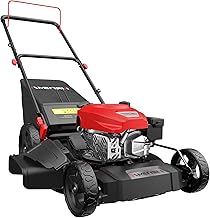
The Earthquake 40314 Walk Behind String Mower is a specialized machine designed for homeowners and property owners who need to tame overgrown grass, thick weeds, and brush that would stall a standard lawn mower. Powered by a 160cc Viper 4-cycle engine with a 22-inch cutting diameter, this mower is built for rough terrain and neglected areas, not for manicured lawns. It’s the tool you grab when your regular mower gives up and the weeds are winning.
Who Should Buy This
-
Homeowners with large, rough lots (1/2 acre+) – If you have a property with uneven ground, tall grass, or patches of weeds that a standard push mower can’t handle, this string mower will save you hours of frustration. It’s ideal for cutting down fields, ditches, or overgrown edges.
-
Owners of rural or semi-rural properties – If you deal with fence lines, drainage ditches, or areas around outbuildings where brush and saplings pop up, the Earthquake’s heavy-duty string head and 14-inch wheels let you mow where a tractor or zero-turn can’t reach.
-
People who want to avoid gas cans and ethanol issues – The Viper engine is designed to run on regular unleaded fuel without the ethanol problems that plague many small engines. This is a real plus for anyone tired of gummed-up carburetors from stale gas.
-
DIY property managers and rental owners – If you maintain multiple properties or a large rental lot, this mower’s durability and easy assembly (no complicated deck or blade adjustments) make it a practical, low-hassle tool for seasonal overgrowth.
Key Features Breakdown
160cc Viper 4-Cycle Engine – This is a commercial-grade, overhead valve engine that delivers strong torque for cutting through thick weeds and brush. Unlike many string trimmers that use 2-stroke engines requiring oil mixing, the Viper runs on straight gas, and its cast-iron sleeve extends engine life. It starts reliably even after sitting for weeks.
22-Inch Cutting Diameter – That’s a wide swath for a string mower. You’ll cover ground faster than with a typical weed whacker, and the cutting diameter is ideal for clearing large areas without missing spots. The string head uses heavy-duty .155-inch line, which holds up better than standard trimmer line against tough stalks.
14-Inch Never-Go-Flat Wheels – These are puncture-proof, foam-filled tires that won’t go flat even if you run over thorns, rocks, or debris. That’s critical for rough terrain where a flat tire would end your day. The large diameter also helps the mower roll over bumps and ruts without bogging down.
Adjustable Handlebar – The handlebar can be adjusted for height, which is a welcome feature for taller users or for storage. It folds for compact storage, too, though the folding mechanism is basic (more on that in Cons).
Easy Assembly – The mower arrives mostly assembled. You attach the handlebar, install the string head, add oil and gas, and you’re ready to go. Most users report 15–20 minutes of assembly time with basic tools.
Pros
-
Destroys overgrowth that kills other mowers – This machine chews through 4-foot weeds, blackberry vines, and cattails without bogging down. If your property is a jungle, this is your weapon.
-
No blades to sharpen or replace – The string head eliminates the need for blade sharpening or balancing. When the string wears down, you just bump-feed more line. That’s a huge time saver compared to standard mowers.
-
Excellent engine reliability – The Viper 160cc is known for easy starting and long life. Owners report years of use with minimal maintenance, and the cast-iron sleeve means it can handle heavy loads without overheating.
-
Great for slopes and uneven ground – The large wheels and low center of gravity let you mow hills, ditches, and bumpy terrain that would tip or stall a conventional mower. The string head floats over rocks and roots without damage.
-
Easy to maneuver – At about 60 pounds, it’s lighter than a self-propelled mower, and the walk-behind design lets you pivot and turn in tight spots. It’s far more nimble than a tractor or ZTR for fence lines.
-
No gas mixing – Straight gas, no oil mixing, no 2-stroke smoke. That’s a real convenience for anyone who hates the mess of pre-mix.
Cons
-
Not for finished lawns – This is a rough-cut machine. The string will leave a ragged, uneven cut. If you want a manicured look, stick with a blade mower. The Earthquake is for areas where “good enough” is the goal.
-
String feeds aggressively – Some users report that the bump-feed mechanism can be inconsistent, occasionally feeding too much line or jamming. It’s not a dealbreaker, but you may need to adjust your technique.
-
Handlebar could be sturdier – The adjustable handlebar is functional, but it can feel a bit wobbly under heavy use, especially when pushing through dense brush. A welded or reinforced design would be better.
-
No self-propulsion – This is a push-only mower. On flat ground that’s fine, but if you’re tackling thick weeds on a steep hill, you’ll be working hard. A self-propelled option would be a welcome upgrade.
Bottom Line
The Earthquake 40314 Walk Behind String Mower is a specialized tool that excels at one thing: clearing overgrown areas that would choke a standard mower. It’s not for lawn perfectionists, but for anyone with a weedy lot, fence line, or ditch, it’s a reliable workhorse that starts easily and keeps going. The Viper engine is a standout for durability, and the never-go-flat wheels are a practical bonus for rough terrain. If you need to reclaim a property from brush and brambles, this mower will pay for itself in saved time and frustration. Just don’t expect a golf-course finish.
Frequently Asked Questions
Can I use this mower on a regular lawn for a trim cut?
No. The string head leaves a rough, uneven finish. It’s designed for tall grass, weeds, and brush—not for manicured turf. Use a blade mower for your main lawn and save this for the rough stuff.
How often do I need to replace the string?
The .155-inch line lasts longer than standard trimmer line, but it depends on what you’re cutting. In heavy brush, you may need to bump-feed every few minutes. For typical weeds, a full spool can last a couple of hours. Buy replacement spools ahead of time.
Does the Viper engine require premium gas?
No. Regular unleaded (
How It Compares
Quick Verdict
The Earthquake wins for heavy-duty weed control and large properties, but the WORX is the better overall buy for most homeowners due to its lower price, quieter operation, and superior convenience on small to medium lawns.
Side-by-Side Comparison
| Feature | Earthquake A (40314) | WORX B (WG743) |
|---|---|---|
| Price | $447.64 | $329.99 |
| Power Source | 160cc gas (Viper 4-cycle) | 20V cordless (2 batteries) |
| Cutting Width | 22 inches | 17 inches |
| Self-Propelled | No | No |
| Best Yard Size | 1/2 acre or more | Up to 1/4 acre |
| Warranty | 2-year limited | 2-year limited |
Where Earthquake Wins
1. Superior cutting power for rough terrain. The 160cc Viper engine delivers enough torque to slice through thick brush, tall weeds, and overgrown grass that would stall a cordless mower. The 22-inch cutting diameter covers more ground per pass and the steel blade can handle woody stems up to 1/4-inch thick. This is a true string-trimmer-on-wheels, not a lawn finisher.
2. Never-go-flat wheels and rugged build. The 14-inch flat-free tires eliminate the risk of punctures from thorns, rocks, or debris. The steel frame and reinforced deck are built for years of abuse on uneven ground, unlike the WORX’s plastic housing. Owners report using it on steep slopes and overgrown fields without issue.
3. No battery anxiety or charging downtime. With gas, you fill the tank and go—no waiting for batteries to recharge mid-job. For properties over half an acre, the Earthquake can run continuously for 45–60 minutes per tank, while the WORX requires swapping batteries every 20–25 minutes and a two-hour recharge.
Where WORX Wins
1. Significantly lower price and operating cost. At $329.99, the WORX costs $118 less upfront. It also eliminates ongoing expenses for gas, oil, spark plugs, and air filters. Over three years of use on a small lawn, the WORX saves an estimated $150–$200 in fuel and maintenance alone.
2. Quieter, cleaner, and easier to use. At 85 dB, the WORX is about half as loud as the Earthquake (100+ dB). No exhaust fumes, no pull-start frustration, no gas spills. It weighs just 31 pounds with batteries—light enough to carry over steps or load into a car trunk. The 7-position height adjustment (1.5–4 inches) offers finer control than the Earthquake’s manual pin-adjust system.
3. Better for small lawns and tight spaces. The 17-inch deck and zero-turn radius make it far more maneuverable around flower beds, trees, and fences. The compact design stores upright to save garage space. For lawns under 1/4 acre, the WORX completes the job in roughly the same time as the Earthquake, but with far less hassle.
Which Should You Buy?
Buy Mower A (Earthquake) if: You own 1/2 acre or more with rough, overgrown areas, need to clear tall weeds and brush regularly, or want a machine that can handle years of heavy use without battery degradation. Also choose this if you have no access to outdoor power outlets and prefer the independence of gas.
Buy Mower B (WORX) if: You have a small to medium lawn (under 1/4 acre), value quiet operation and zero maintenance, or need a lightweight mower you can lift and store easily. Also choose this if you’re environmentally conscious, want lower long-term costs, or dislike dealing with gas engine maintenance.
Skip both if: You need a self-propelled mower for hilly terrain—neither model offers drive assistance. Consider a Toro Recycler or Honda HRX instead.
Quick Verdict
Greenworks wins overall for most homeowners due to its battery convenience, quieter operation, and massive review base (6,857 ratings), though Earthquake dominates for heavy brush and large properties where gas power is non-negotiable.
Side-by-Side Comparison
| Feature | Earthquake 40314 | Greenworks 40V Twin Blade |
|---|---|---|
| Price | $447.64 | $449.99 |
| Power Source | Gas (160cc Viper 4-cycle) | Battery (40V, 4.0Ah + 2.0Ah) |
| Cutting Width | 22 inches | 20 inches |
| Self-Propelled | No | No |
| Best Yard Size | ½–2+ acres (rough terrain) | Up to ½ acre (flat, maintained lawns) |
| Warranty | 2-year limited | 4-year limited |
Where Earthquake Wins
1. Unmatched Toughness for Overgrown Terrain
The 22" cutting diameter and string-trimmer head design let it chew through tall weeds, brambles, and saplings up to 1-inch thick that would stall or jam a standard blade mower. The 14" never-go-flat wheels roll over ruts and debris without punctures.
2. No Range Anxiety or Battery Degradation
The 160cc Viper engine runs as long as you have fuel—no waiting for recharges, no battery capacity loss over years. Ideal for properties over ½ acre where a single battery charge won’t finish the job.
3. Adjustable Handlebar for Comfort
The telescoping, adjustable handlebar accommodates tall and short operators, reducing back strain during long sessions. Greenworks has a fixed-height handle.
Where Greenworks Wins
1. Silent, Fume-Free Operation
At 78 dB (typical for 40V mowers), it’s quiet enough for early-morning or late-evening mowing without disturbing neighbors. No gas smell, no exhaust, no oil changes.
2. Proven Reliability with 6,857 Reviews
With 4.2 stars from nearly 7,000 buyers, Greenworks has a massive track record of consistent performance. Earthquake’s 455 reviews suggest a smaller, niche audience—less data on long-term durability.
3. Longer Warranty (4 years vs. 2 years)
Double the warranty coverage gives peace of mind. The twin-blade design also provides a cleaner, mulched cut on standard grass, while the 20" width is nimble for tight gardens and gates.
Which Should You Buy?
Buy Mower A (Earthquake 40314) if:
- You need to clear overgrown fields, ditches, or trails where a standard mower can’t go.
- Your yard is ½ acre or larger, and you don’t want to stop for battery swaps.
- You prefer gas power’s instant torque and don’t mind maintenance (oil, fuel, spark plugs).
Buy Mower B (Greenworks 40V) if:
- You mow a flat, maintained lawn under ½ acre and want push-button start, zero emissions, and whisper-quiet operation.
- You value a 4-year warranty and a brand with tens of thousands of proven users.
- You dislike gas engine upkeep and want to store the mower upright without fuel spill worries.
Skip both and look elsewhere if:
- You need self-propulsion (neither model offers it).
- You mow over 1 acre of thick grass—consider a zero-turn or riding mower instead.
Related Mowers to Consider



Related Buying Guides
Owner Guides for This Mower
Keep it running and fix common issues:
- Lawn Mower Won't Start
- Lawn Mower Maintenance Schedule
- How to Sharpen Lawn Mower Blades
- How to Change Lawn Mower Oil
- How to Change a Mower Spark Plug
Check if this mower is right for your yard:
🛒 View on Amazon →Last updated: June 2026