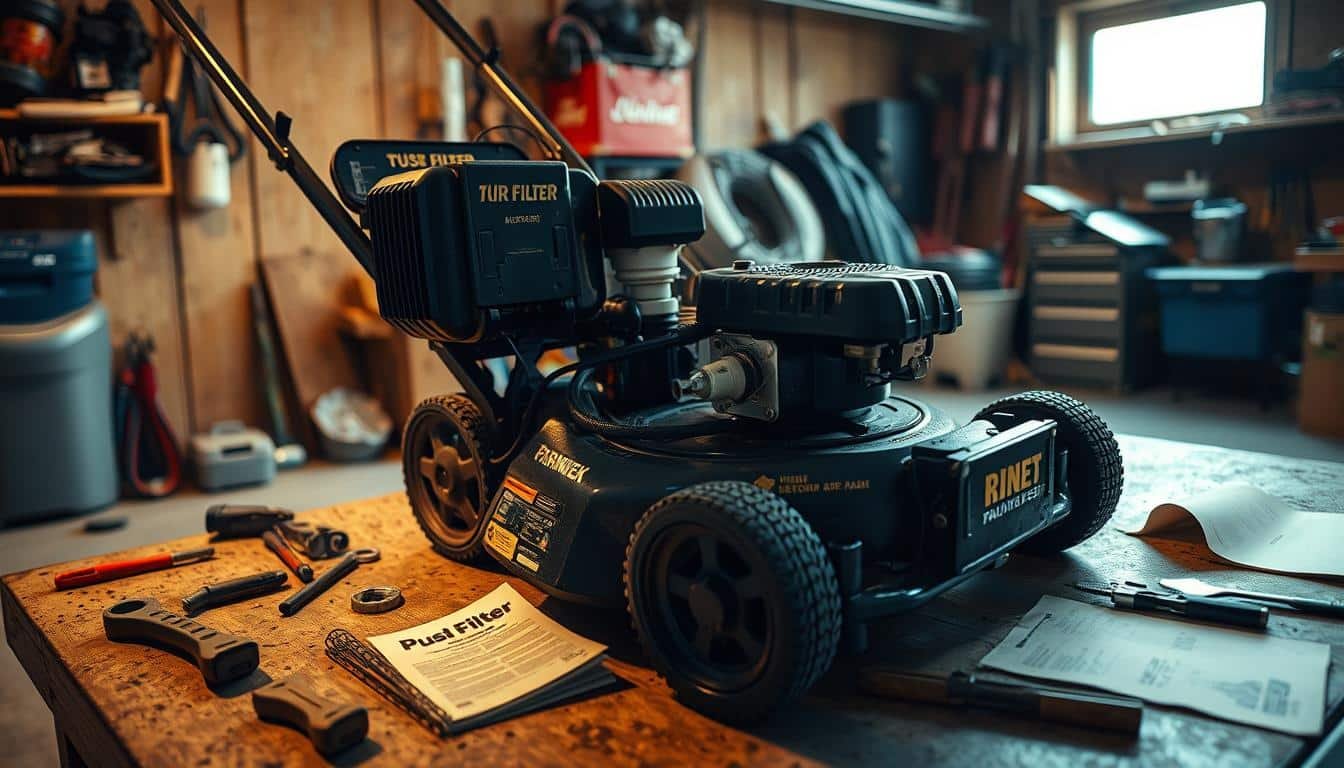
Have you ever experienced the frustrating moment when your lawn equipment roars to life only to fall silent seconds later? This common problem can turn a simple yard task into a major headache. The good news is that this issue rarely signals a major engine failure.
Most often, the reasons your lawn mower behaves this way are simple and fixable. A dirty carburetor, stale gasoline, or a clogged air filter are typical culprits. Identifying the source of the problem is the first step toward a solution.
This guide provides clear, step-by-step diagnostic procedures. You will learn to check the fuel system, ignition components, and air intake. With basic maintenance, you can often restore your equipment to reliable operation and avoid costly professional repairs.
Key Takeaways
- This starting and stopping issue is a common frustration with usually simple causes.
- A dirty carburetor is a frequent reason for fuel flow problems.
- Old gasoline can degrade and prevent the engine from running properly.
- A clogged air filter disrupts the air-fuel mixture the engine needs.
- A worn spark plug may fail to maintain ignition after starting.
- Most fixes involve basic cleaning or inexpensive part replacements.
- Learning to diagnose these problems saves time and money on lawn care.
Understanding Your Mower’s Engine Components
To effectively troubleshoot a lawn mower that cuts out, a basic grasp of its core engine parts is essential. Your equipment relies on several interconnected systems that must function harmoniously. When one part fails, it can disrupt the entire process.
Role of the Carburetor, Air Filter, and Fuel System
The carburetor is the heart of the fuel system. It mixes air and gasoline in a precise ratio for combustion. Tiny passages inside this component control the flow.
These small jets can easily become blocked by debris or old fuel residue. A clogged carburetor disrupts the critical air fuel mixture. This is a frequent reason for an engine to stall.
The air filter protects the carburetor. It ensures only clean air enters the engine. A dirty filter restricts airflow, choking the engine just like a blocked fuel line.
Importance of the Spark Plug and Ignition Components
Your spark plug has one job: creating the electrical spark for ignition. It ignites the compressed air fuel mixture in the combustion chamber. Without a strong spark, the engine cannot run.
A worn or fouled spark plug may fail to maintain this essential spark. This often causes the engine to start using the initial fuel charge but die immediately after. Regular inspection of this part is vital for reliable operation.
Diagnosing Fuel and Air Flow Problems
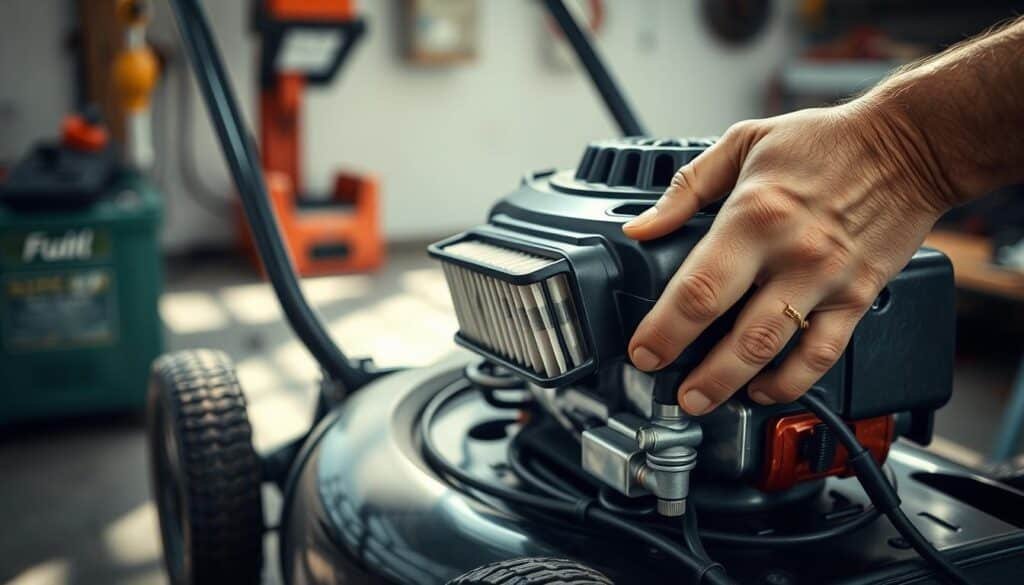
When your equipment fires up but refuses to stay running, the problem often lies in the fuel and air delivery systems. An imbalance here prevents the engine from sustaining combustion. These are among the first areas you should inspect.
Effects of Old or Stale Gasoline on Engine Performance
Old fuel is a frequent culprit. Gasoline begins to degrade after about 30 days inside your tank. It forms a sticky varnish that clogs the carburetor and fuel lines.
This degraded gas also fails to burn efficiently. Your engine might start on the initial charge but stall because the fuel cannot sustain combustion. If your gas is dark or smells sour, drain the tank completely.
Refill with fresh, high-quality fuel. For long-term storage, a stabilizer additive preserves gas quality.
Cleaning and Replacing a Clogged Air Filter
A dirty air filter creates the opposite problem. It restricts air flow, causing a too-rich fuel mixture. This floods the engine and leads to a stall.
You should remove air filter housing to inspect the filter. If it’s clogged with dirt and grass, it needs attention. Foam filters can be washed with a mild cleaner, then dried thoroughly.
Paper filter types are often best replaced. A clean air filter ensures your lawn mower gets the clean air it needs to run smoothly.
Inspecting the Ignition System and Electrical Connections
A weak or failing ignition system is another common reason your equipment may not stay running. This system is responsible for creating the spark that ignites the fuel.
Problems here can cause the engine to fire initially but fail to sustain operation. Let’s examine the key components you need to check.
Steps to Check and Clean the Spark Plug
Your spark plug is critical for ignition. Over time, it can get dirty or wear out.
Always disconnect the spark plug wire before you begin. This is a vital safety step to prevent accidental starting.
Use a spark plug wrench to remove the component. Inspect the electrode for a grey or black carbon coating.
Light deposits can be cleaned with a wire brush. Severe damage requires a new spark plug.
Next, check the electrode gap with a feeler gauge. It must match your mower‘s specifications.
A clean, properly gapped spark plug is essential for a strong, consistent spark that keeps your engine running smoothly.
After cleaning or replacement, screw the plug back in and reconnect the wire firmly.
Verifying the Integrity of Spark Plug Wires and Ignition Coil
The spark plug wire delivers voltage from the ignition coil. Check it for cracks or corrosion.
Damaged wires can cause an intermittent spark. This leads to unreliable operation.
The ignition coil generates the high voltage needed for the spark. A failing coil often causes sudden shutdowns.
| Component | Common Issue | Recommended Action |
|---|---|---|
| Spark Plug | Carbon buildup, worn electrode | Clean or replace every 1-2 years |
| Spark Plug Wire | Cracks, brittleness, poor connection | Inspect annually; replace if damaged |
| Ignition Coil | Internal failure | Test with a multimeter; replace if faulty |
Regular inspection of these electrical parts ensures a reliable spark for your lawn mower.
Common Troubleshooting: why does my push mower start then die
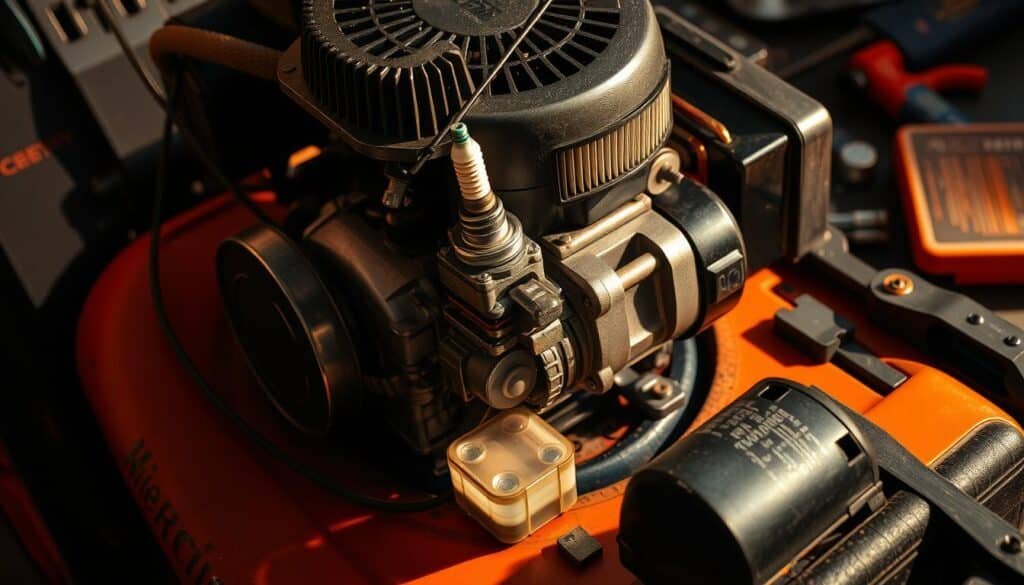
Following a logical troubleshooting sequence prevents unnecessary repairs and saves valuable time. This systematic approach helps you identify the root cause efficiently.
Step-by-Step Diagnostic Process
Begin with the simplest checks first. Inspect the fuel quality and replace if stale. Examine the air filter for clogs that restrict airflow.
Next, check the spark plug for carbon buildup. A dirty plug may fail to maintain ignition. Clean or replace it as needed.
The carburetor is a frequent culprit for fuel delivery issues. Use cleaner to remove varnish from small jets. Allow it to penetrate before clearing with compressed air.
When to Consider Professional Help
If basic troubleshooting doesn’t resolve the issue, professional assistance may be necessary. Complex internal problems require specialized tools.
Consider seeking help when repair costs approach half the price of new equipment. Older units with extensive wear may not be worth fixing.
| Symptom Pattern | Likely Cause | Recommended Action |
|---|---|---|
| Engine stops immediately after start | Fuel delivery problem or clogged carburetor | Clean fuel system, check carburetor jets |
| Runs for minutes then dies | Blocked fuel cap vent or overheating component | Check vent, inspect ignition coil |
| Intermittent operation | Failing spark plug or electrical connection | Test spark plug wire, replace if damaged |
Preventative Maintenance for a Reliable Mower
The secret to a dependable mower lies not in complex repairs but in simple, regular upkeep. Following a consistent maintenance schedule prevents most common problems before they occur. This proactive approach saves you time and frustration during mowing season.
Your air filter needs regular attention to protect the engine. Check it before each season and clean or replace it as needed. A clean filter ensures proper air flow for optimal performance.
Fuel system care begins with fresh gasoline in your tank. Never let fuel sit for more than 30 days without stabilizer. This prevents clogs in the carburetor jets that can disrupt operation.
Regular Cleaning, Inspection, and Part Replacement
Spark plug maintenance involves annual inspection and cleaning. Replace this component every one to two years for reliable ignition. A fresh plug ensures consistent starting power.
Engine oil changes follow manufacturer schedules, typically every 50 hours. Clean oil reduces internal wear and maintains compression. This simple task extends your equipment’s lifespan significantly.
Always prioritize safety during any maintenance work. Disconnect the spark plug wire before beginning. Allow the engine to cool completely and work in a well-ventilated area.
Keeping a maintenance log helps track service intervals for your lawn mower. Record oil changes, filter replacements, and other tasks. This organized approach ensures you never miss critical maintenance that keeps your mower running smoothly.
Conclusion
Your ability to diagnose common engine problems ensures your lawn care equipment remains reliable season after season. The knowledge gained from this guide empowers you to address starting issues confidently.
Most stalling problems stem from basic maintenance needs. A clean air filter, fresh fuel, and proper spark plug care prevent most operational issues. Regular attention to these components maintains optimal combustion.
Following systematic troubleshooting saves time and money. You can identify whether the problem lies in fuel delivery, air intake, or ignition systems. This approach leads to effective repairs.
Consistent maintenance extends your equipment’s lifespan significantly. Proper care ensures many seasons of trouble-free lawn care. Your investment in learning these skills pays long-term dividends.
FAQ
What are the most common reasons a lawn mower starts but then dies?
The most frequent culprits involve the air-fuel mixture. This often includes a clogged air filter, old fuel in the tank, or a dirty carburetor. Problems with the spark plug or a faulty ignition wire can also cause the engine to stall shortly after starting.
How can old gasoline cause my mower engine to stall?
Gasoline degrades over time, losing its combustibility. This stale fuel can leave gummy deposits in the carburetor jets, disrupting the precise fuel-air mixture needed for combustion. Using fresh gas is a critical step in troubleshooting.
What is the safest way to check the spark plug?
Always disconnect the spark plug wire for safety first. Remove the plug and inspect the electrode for heavy carbon buildup or damage. A clean or new spark plug ensures a strong spark for reliable ignition.
When should I consider replacing the air filter on my mower?
You should inspect the air filter each time you mow. If it’s clogged with grass clippings and debris, clean it or install a new one. A clean filter is essential for proper engine airflow and performance.
How does preventative maintenance prevent starting problems?
Regular maintenance, like changing the oil, using a fuel stabilizer, and cleaning the mower deck after mowing, keeps critical parts in good condition. This routine care prevents many common issues before they occur.