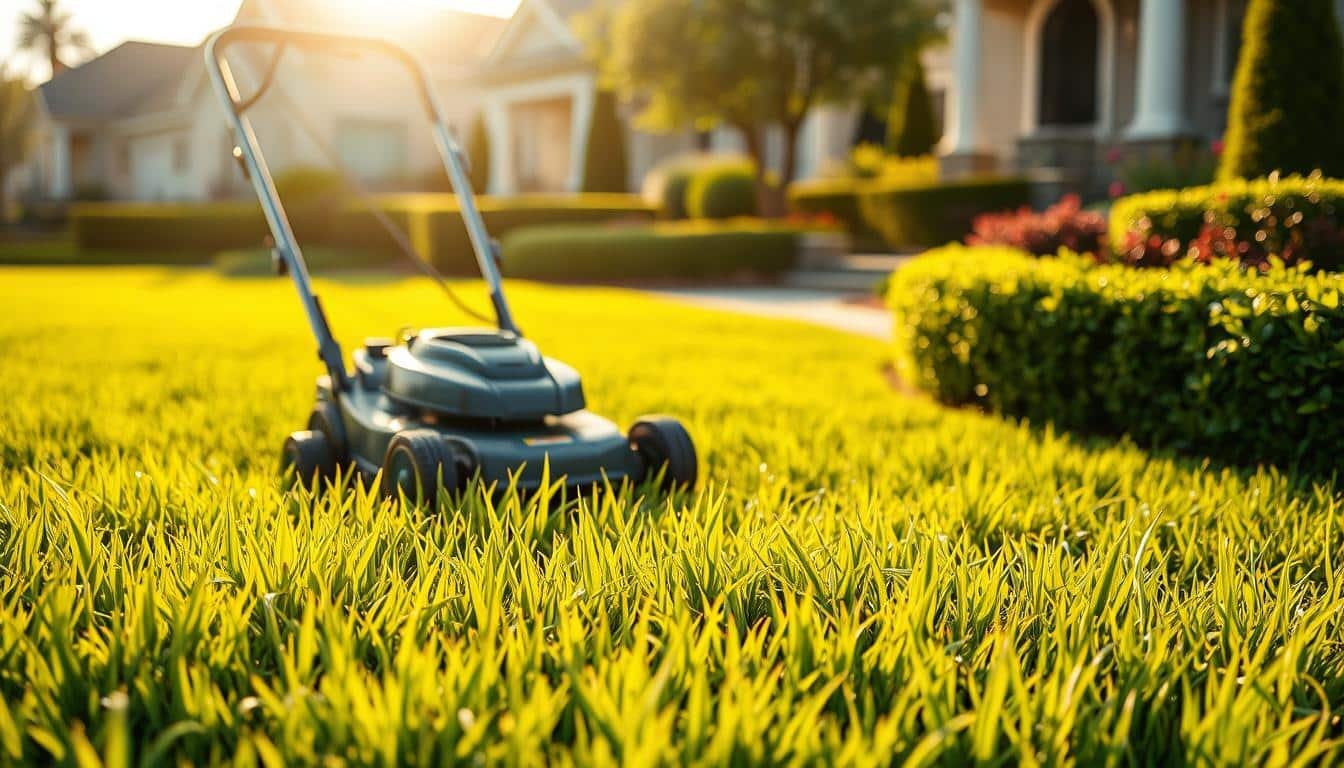
What if the single most important decision for your lawn’s future happens before you ever start the mower? Achieving that perfect, lush green carpet depends on one critical act of patience. Knowing the ideal time for the first cut makes all the difference.
Your approach to lawn care varies greatly. Did you plant seeds or lay down sod? The establishment method dictates the waiting period. Rushing this step can harm tender young shoots and weaken the root system.
Getting the right time is not just about aesthetics. It’s about building a resilient and healthy turf. This foundational mowing sets the stage for years of beauty and value for your property.
Key Takeaways
- The first mow is a critical step for long-term lawn health.
- Patience is essential; the timing differs for seeded lawns versus sod.
- Mowing too early can damage young grass and stunt root development.
- Proper timing leads to a thicker, more resilient turf.
- Different grass types may have slightly different first-mow requirements.
Understanding the Growth of Your New Lawn
Different establishment methods create distinct timelines for that crucial first trim of your emerging lawn. Your choice between seeding and sod installation determines the waiting period before maintenance begins.
Identifying Seeded Versus Sod Lawns
Seeded areas require significant patience. The journey from grass seed to established turf involves germination and root development. This process typically spans eight weeks after planting.
Sod installations offer immediate visual satisfaction. However, the underlying root system needs time to integrate with your native soil. Most sod becomes ready within two to four weeks.
| Establishment Method | Typical Waiting Period | Key Development Phase | Readiness Indicator |
|---|---|---|---|
| Seeded Lawn | 8 weeks | Germination & root growth | 3-4 inches height |
| Sod Installation | 2-4 weeks | Root establishment | Resists gentle pulling |
| Newly Seeded Area | Varies by grass type | Blade development | Multiple blades per plant |
Recognizing When Your Grass Is Ready for Its First Cut
Visual cues signal readiness for that initial maintenance. A newly seeded lawn should display uniform density and upright blades. Immature turf appears thin or floppy.
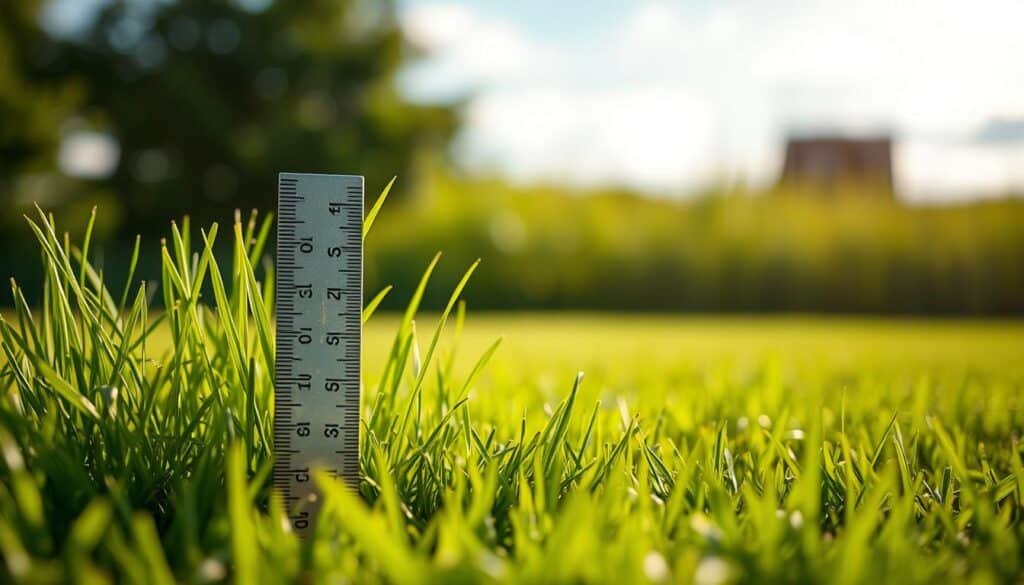
The proper height provides another reliable indicator. Most grass types reach 3 to 4 inches before handling mowing stress. This height supports strong root development.
Patience during establishment creates resilient turf capable of handling regular maintenance and foot traffic.
Environmental factors influence your specific timeline. Weather conditions and soil temperature affect germination speed. For specialized guidance on specific grass types like fescue, consult this detailed overseeding timeline.
When Can I Mow My New Grass: Timing and Techniques
The initial cutting session sets the stage for your turf’s long-term vitality and appearance. Proper execution during this critical phase ensures healthy development.
Ideal Grass Height and Growth Indicators
Most varieties reach 3 to 4 inches before handling maintenance stress. This height supports robust root systems and blade strength.
Different types have specific requirements. Cool-season grasses like tall fescue need more growth than warm-season varieties.
| Grass Type | First Mow Height | Target Cutting Height |
|---|---|---|
| Tall Fescue | 4-9 inches | 3-6 inches |
| Kentucky Bluegrass | 4-6 inches | 3-4.5 inches |
| Bermudagrass | 3-4 inches | 2-2.67 inches |
| St. Augustine | 5.6-9 inches | 3.75-6 inches |
Following the One-Third Rule for a Healthy Lawn
The one-third grass principle prevents stress during maintenance. Never remove more than one-third of the blade length in a single session.
For your first mow, let the turf reach one-third above the target mowing height. This approach maintains plant health while achieving the desired appearance.
Proper timing and technique establish foundation practices that benefit your landscape for years. Measure carefully and follow guidelines specific to your grass variety.
Preparing Your Mower and Mowing Techniques
Before you ever start the engine, your mower’s condition determines how well your young turf will handle its first haircut. Proper equipment setup protects delicate plants and promotes healthy development.
Ensuring Sharp Blades for a Clean Cut
Sharp mower blades create clean cuts that heal quickly. Dull equipment tears grass blades instead of slicing them cleanly. This damage stresses plants and creates entry points for disease.
Inspect your cutting edge before each session. A sharp blade prevents brown tips and maintains plant health. Regular sharpening extends your equipment’s lifespan too.
Adjusting Mower Settings to Avoid Stressing New Grass
Raise the cutting height for that initial session. Higher settings prevent shocking tender plants. This approach trims rather than scalps the emerging turf.
Clean your equipment thoroughly before use. Remove old clippings and debris that might spread problems. A clean mower operates more efficiently and protects your investment.
Choose dry conditions for your first cutting session. Moist grass clumps unevenly and stresses the mower. Dry conditions ensure smooth operation and even results.
Post-Mowing Care for a Thriving Lawn
The work doesn’t end when the mower stops—proper aftercare determines how well your lawn recovers and thrives. Your attention now shifts to supporting recovery and establishing healthy maintenance patterns.
Watering and Nutrient Management After the First Mow
Give your turf a thorough drink after cutting. This helps grass blades recover from stress and encourages deeper root development. Water early in the morning to reduce evaporation.
Consider using a mulching setting if your equipment offers it. Clippings return valuable nutrients to the soil. This natural fertilization supports continued growth without extra cost.
Wait before applying additional fertilizer. If you fertilized at planting, delay until after several sessions. This prevents burning tender young grass with excessive nutrients.
Monitoring Recovery and Adjusting Mowing Patterns
Watch for signs of stress like yellowing or patchy areas. These indicate where your lawn care approach might need adjustment. Early detection prevents larger problems.
Establish a regular schedule for future lawn mowing. Consistent cutting encourages thicker turf development. Always follow the one-third rule to maintain plant health.
Change your cutting direction with each session. This promotes upright growth and prevents ruts. Wait until the turf handles foot traffic comfortably before regular use.
Conclusion
The foundation you build today determines the quality of your landscape for seasons to come. Proper establishment requires patience, especially for a seeded lawn needing eight weeks versus sod’s shorter timeline.
Your approach to mowing makes a lasting impact. Sharp mower blades and the one-third rule protect developing roots. This careful care during the first few cuts establishes resilience.
If uncertainty arises, consider professional services for guidance. They ensure your new grass receives optimal treatment from the start.
Investing time in these practices rewards you with a beautiful, healthy lawn. Your newly seeded lawn will mature into a lush carpet that enhances property value for years.
FAQ
How long after planting grass seed should I wait before the first mow?
You should typically wait until your young grass reaches a mowing height of about 3 to 4 inches. This often takes 3 to 4 weeks after germination, depending on the seed type and weather. Patience is key to allowing strong root development.
What is the one-third rule for cutting new grass?
The one-third rule is a crucial lawn care principle. You should never remove more than one-third of the grass blade height in a single mowing session. This prevents stress, promotes healthier growth, and helps the root system thrive.
Why is it important to use a sharp mower blade on a newly seeded lawn?
Sharp blades on your mower are essential for a clean cut. Dull blades tear the tender grass blades, creating ragged wounds that can lead to disease and browning. A clean cut helps your new lawn recover quickly and stay healthy.
What is the best mowing height for a newly planted lawn?
For the first cut, set your mower to a higher setting. Aim to cut the grass so it stands about 2.5 to 3 inches tall after mowing. This height provides shade for the soil, conserves water, and encourages deep root growth.
How should I care for my lawn immediately after the first mow?
After the first mow, water your lawn deeply but gently to help it recover. Avoid heavy foot traffic for a day or two. Continue with your regular watering schedule and consider a light application of a starter fertilizer to support ongoing growth.