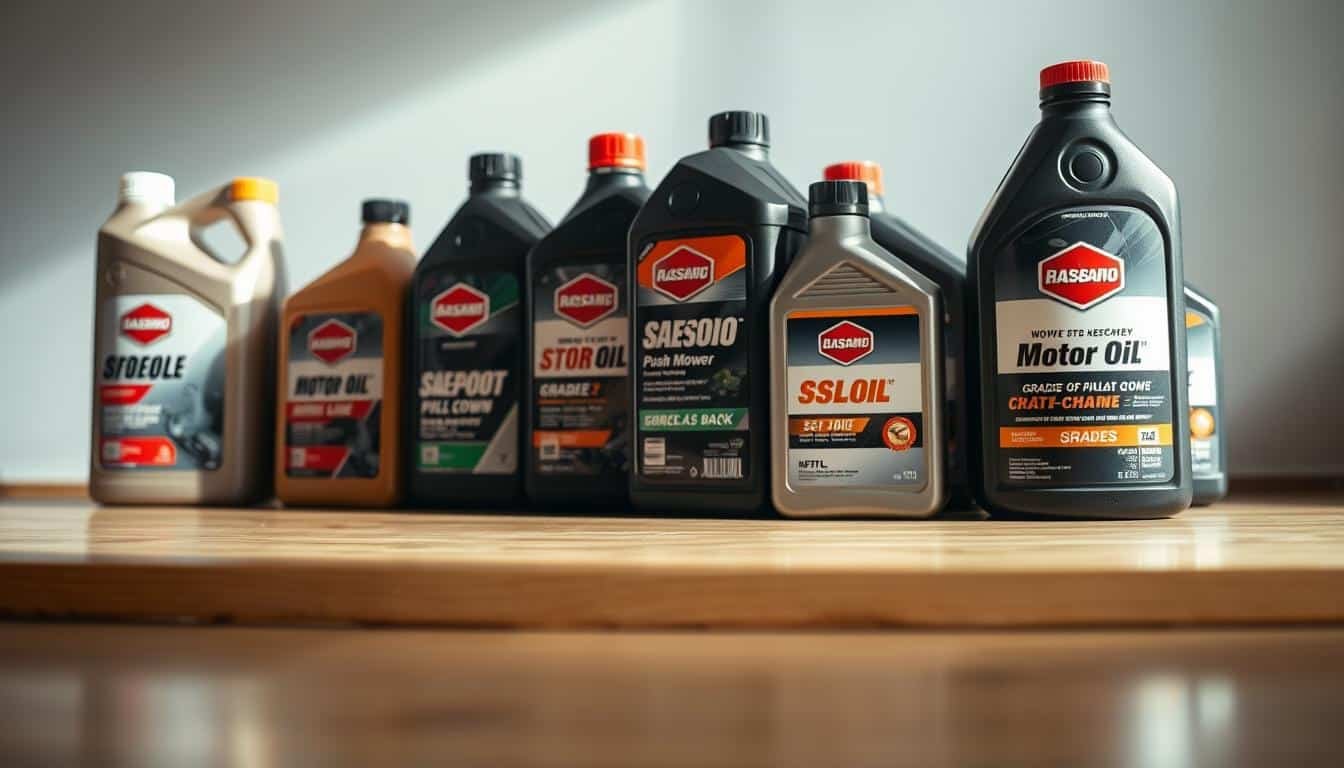
Have you ever wondered if that leftover automotive oil in your garage could work just as well for your lawn equipment? Many homeowners make this costly assumption, not realizing their mower’s engine has very specific lubrication needs.
Choosing the correct lubricant for your lawn mower is more critical than you might think. The right selection ensures optimal performance and extends your equipment’s lifespan significantly. Using an improper type can lead to serious engine damage over time.
Your mower’s engine operates under different conditions than a car engine. It requires specific viscosity grades and additives that automotive formulas lack. This comprehensive guide will help you navigate the confusing aisle of lubricant options with confidence.
You’ll learn about different engine types, temperature considerations, and proper maintenance procedures. Whether you’re a first-time owner or seasoned gardener, this information will keep your equipment running smoothly for years.
Key Takeaways
- Selecting the proper lubricant is essential for your lawn equipment’s performance and longevity
- Mower engines have different requirements than automotive engines
- Using incorrect lubricant can increase wear and reduce efficiency
- Temperature and climate affect which viscosity grade works best
- Proper maintenance includes regular lubricant changes and checking levels
- Following manufacturer recommendations protects your warranty
- Understanding engine types helps you make informed lubricant choices
Understanding Your Lawn Mower’s Oil Requirements
The engine design in your lawn equipment fundamentally changes its lubrication requirements. Proper fluid selection depends on understanding how your specific power plant operates.
Engine Types: Two-Stroke vs. Four-Stroke Considerations
You must identify whether your equipment uses a two-stroke or four-stroke engine. This distinction determines the correct lubricant type for your machine.
Two-stroke engines consume fluid along with gasoline during operation. Some models use mixed lubrication, requiring you to add fluid directly to the fuel tank. Others feature separate lubrication systems with dedicated reservoirs.
Four-stroke engines circulate lubricant through internal components without burning it. These power plants need different chemical properties in their fluids.
Oil Capacity and Temperature Impacts
Your equipment’s fluid capacity varies significantly between models. Walk-behind units typically hold 15 to 18 ounces. Riding mowers require substantially more, often 48 to 64 ounces.
Temperature dramatically affects lubricant performance. Cold conditions below 40°F make thicker grades difficult for starting. Warmer climates above 80°F can cause thinner grades to consume faster.
Never overfill your engine regardless of capacity. Understanding these requirements ensures proper selection for your specific lawn mower and local climate.
How to Determine What Oil Does Push Mower Take

Your lawn mower’s specific lubrication needs are detailed in the operator’s manual that came with your equipment. This document contains the manufacturer’s exact specifications for optimal performance.
Consulting this guide ensures you select the correct product for your engine. Proper maintenance extends your equipment’s lifespan significantly.
Using Your Mower’s Operator’s Manual for Guidance
The operator’s manual provides precise specifications for your lawn equipment. You’ll find recommended viscosity grades, capacity measurements, and special requirements.
Manufacturers like Briggs & Stratton include detailed lubrication guidelines. Following these recommendations protects your warranty coverage.
Your engine label displays the model number or series. Use this information with online tools like the Briggs & Stratton Oil Finder.
These digital resources require three key inputs: your equipment type, engine name, and local temperature range. The tool then suggests the ideal product.
New lawn mowers typically arrive without lubricant pre-filled. You must add the appropriate type before initial use.
Your manual specifies whether conventional or synthetic formulas work best. Always follow the manufacturer’s exact recommendations to prevent engine damage.
Exploring Different Oil Types and Viscosities
The SAE classification system provides a roadmap for choosing the right lubricant based on temperature conditions. Understanding these ratings ensures your lawn equipment receives optimal protection.
Understanding SAE Classifications and Viscosity Ratings
SAE numbers reveal critical performance characteristics. The digit before “W” indicates cold-weather flow properties.
Lower numbers like 5W mean better cold-temperature performance. The number after “W” shows viscosity under heat.
Higher numbers maintain thickness during high-temperature operation. This system helps match lubricants to your local climate.
Conventional, Synthetic, and Fully Synthetic Options
Conventional formulas work well in stable warm conditions. Synthetic options offer superior performance across temperature ranges.
Fully synthetic lubricants provide the highest level of engine protection. They maintain stability in extreme heat and cold.
These advanced formulas reduce consumption and improve fuel efficiency. Always check API service classifications for quality assurance.
Step-by-Step Guide to Changing Lawn Mower Oil

A proper fluid replacement procedure extends the lifespan of your small engine. Regular maintenance prevents costly repairs and keeps your equipment running smoothly.
Following these steps ensures your lawn care tool receives optimal care. Proper technique protects your investment for seasons to come.
Preparing Your Equipment and Gathering Tools
Begin by collecting all necessary supplies before starting the process. You’ll need fresh lubricant, a drain pan, clean rags, and appropriate wrenches.
Position your equipment on a flat, level surface for accurate readings. This prevents false measurements and ensures complete drainage.
Proper Methods for Draining and Refilling Oil
Warm the engine slightly to improve fluid flow through the drain plug. Be careful to avoid burns from hot components.
Place your drain pan beneath the equipment and locate the drain plug. Allow the used lubricant to drain completely before proceeding.
After draining, refill slowly while checking the level frequently. Use the dipstick to monitor progress and prevent overfilling.
Safety Tips and Best Practices
Always clean around the fill cap and drain plug before opening. This prevents dirt contamination that could damage engine components.
Dispose of used fluid responsibly at approved recycling centers. Never pour it on the ground or down drains where it can harm the environment.
Maintaining Optimal Engine Performance and Longevity
Developing smart maintenance practices ensures your investment in lawn care equipment pays off for years. Consistent attention to your equipment’s needs prevents unexpected breakdowns during peak mowing season.
Regular Oil Checks and Dipstick Usage
Before starting your engine each time, check the fluid level using the dipstick. Verify the reading falls between the full and add marks for proper lubrication.
Regular monitoring throughout the season helps detect low levels early. This simple habit prevents engine damage from insufficient lubrication during operation.
Scheduling Oil Changes Based on Hours of Use
Track the number of hours your equipment operates to schedule service accurately. Walk-behind models need changes every 50 hours or annually. Riding mowers require service every 100 hours or annually.
New equipment during break-in may need more frequent changes—about 25 hours initially. Synthetic formulas don’t eliminate regular maintenance requirements.
Keep a usage log to maintain proper intervals. Consulting Briggs & Stratton dealers provides expert guidance for your specific engine type and usage patterns.
Conclusion
Proper engine care transforms routine lawn maintenance into long-term equipment reliability. You now possess comprehensive knowledge about your mower’s specific requirements.
Understanding how engine type, temperature, and capacity influence selection empowers informed decisions. This knowledge helps you choose the correct product for your lawn equipment.
Regular maintenance following manufacturer guidelines protects your investment significantly. Whether maintaining residential or professional equipment, these principles ensure optimal performance.
Always consult your operator’s manual for specific recommendations. Different engines may have unique requirements affecting service intervals and product type.
Your mower’s longevity depends on using quality products in the proper capacity. Following maintenance schedules prevents costly repairs and keeps your lawn mower running efficiently season after season.
FAQ
How do I know if my lawn mower uses two-stroke or four-stroke engine oil?
Check your operator’s manual for the definitive answer. Generally, if your machine has a separate gas tank and oil fill cap, it’s a four-stroke engine. If you mix gasoline with oil directly into one tank, it’s a two-stroke engine.
What is the best oil viscosity for my mower’s engine?
Most modern four-stroke engines from brands like Briggs & Stratton use SAE 30 for warmer temperatures or 10W-30 for varying climates. Your manual specifies the ideal viscosity based on your local weather conditions.
Can I use synthetic oil in my push mower?
Yes, you can use synthetic oil. High-quality synthetic options often provide better protection, reduce engine wear, and perform well in both hot and cold temperatures. Always confirm compatibility in your equipment’s manual first.
How often should I change the oil in my lawn mower?
You should change the oil every 25-50 hours of operation or at least once per mowing season. Regular maintenance based on hours of use is crucial for optimal engine performance and longevity.
Where can I find the oil capacity for my specific model?
Your mower’s oil capacity is listed in the operator’s manual. You can also often find this information on the manufacturer’s website or on a sticker located directly on the engine itself.
What is the correct way to check the oil level?
A> Ensure the engine is on a level surface and cool. Remove the dipstick, wipe it clean, reinsert it fully, and then remove it again to check the level. The oil should be between the “Full” and “Add” marks on the dipstick.