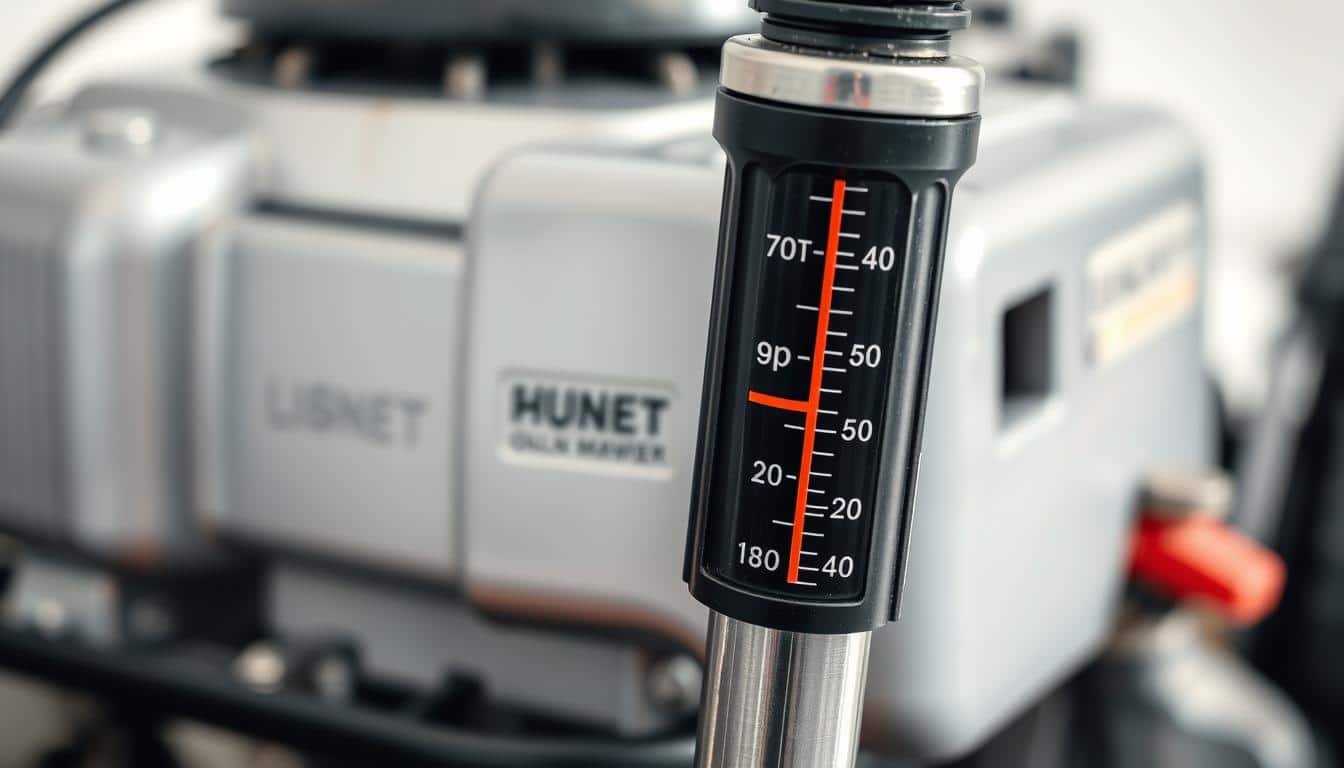
Have you ever wondered if you’re giving your lawn mower the right amount of engine oil for peak performance? Many gardeners assume that a little extra oil can’t hurt, but this common belief can lead to serious issues. Getting the quantity right is a critical step for your equipment’s health.
Your mower’s engine relies on a precise oil level to operate smoothly and last for years. Using the correct capacity prevents damage from both underfilling and overfilling. This simple maintenance task directly impacts your machine’s cutting power and fuel efficiency.
This guide will help you determine the exact amount your specific model requires. You will learn to identify your mower type and understand its unique capacity needs. We convert common measurements to litres for your convenience, eliminating all guesswork.
Proper oil maintenance protects your investment and ensures your equipment starts reliably every time. By the end, you will have the confidence to perform this essential garden task correctly.
Key Takeaways
- Using the precise amount of oil is vital for your mower’s engine performance and longevity.
- The correct oil capacity depends on your specific mower model and engine type.
- Maintaining the proper level affects cutting quality, efficiency, and equipment lifespan.
- This guide provides clear instructions to find your mower’s requirement in litres.
- Correct oil use prevents costly damage and ensures reliable operation.
- You will learn to measure levels accurately for optimal results.
Understanding Lawn Mower Oil and Engine Requirements
Your mower’s engine depends on specific oil formulations to operate efficiently throughout different seasons. The right lubricant protects internal components and ensures reliable starting.
Manufacturers like Briggs & Stratton recommend high-quality detergent oils for optimal performance. Following these guidelines maintains your warranty and extends equipment life.
Importance of Using the Right Oil
Using incorrect oil viscosity can cause serious problems. Hard starting in cold weather and increased consumption in heat are common issues.
Your equipment requires oils classified for service SF, SG, SH, SJ or higher. Avoid special additives that interfere with proper lubrication.
| Oil Type | Temperature Range | Best Application |
|---|---|---|
| SAE 30 | Above 40°F | Warm climates, small engines |
| SAE 10W-30 | Varying temperatures | Improved cold starting |
| Synthetic 5W-30 | -20°F to 120°F | All-season protection |
| Vanguard 15W-50 | Heavy use conditions | Commercial applications |
Engine Types and Their Oil Needs
Different engine designs have unique requirements. Single-cylinder models typically use SAE 30 or 10W-30 oils.
Larger twin-cylinder engines often benefit from synthetic formulations. These provide superior protection across temperature ranges.
Always consult your equipment manual for specific recommendations. This ensures compliance with manufacturer guidelines for your model.
Answering “how much oil does a lawn mower take in litres”
Finding the correct lubricant amount for your cutting machine involves more than just guessing based on size alone. Your equipment’s specific design determines the precise volume needed for optimal performance.
Different Mower Models and Oil Capacities
Equipment categories have distinct lubricant requirements. Walk-behind units typically need smaller volumes compared to riding models.
The table below shows common capacity ranges for different equipment types:
| Mower Type | Capacity (Ounces) | Capacity (Litres) |
|---|---|---|
| Walk-Behind | 15-18 oz | 0.44-0.53 L |
| Riding | 48-64 oz | 1.42-1.89 L |
These ranges represent typical specifications. Your particular model may fall outside these values.
Manual Recommendations and Manufacturer Guidelines
Always consult your operator’s manual before adding lubricant. This document provides exact specifications for your engine.
New equipment typically arrives without pre-added lubricant. You must add the proper amount before initial use.
Following manufacturer guidelines prevents overfilling issues. This protects your investment and ensures reliable operation.
Step-by-Step Guide to Checking and Changing Your Oil
Proper maintenance requires knowing the exact procedure for checking and replacing your equipment’s lubricant. Following these steps ensures your machine operates smoothly throughout the season.
This process protects your investment and maintains cutting performance. You will learn the correct technique for accurate measurements.
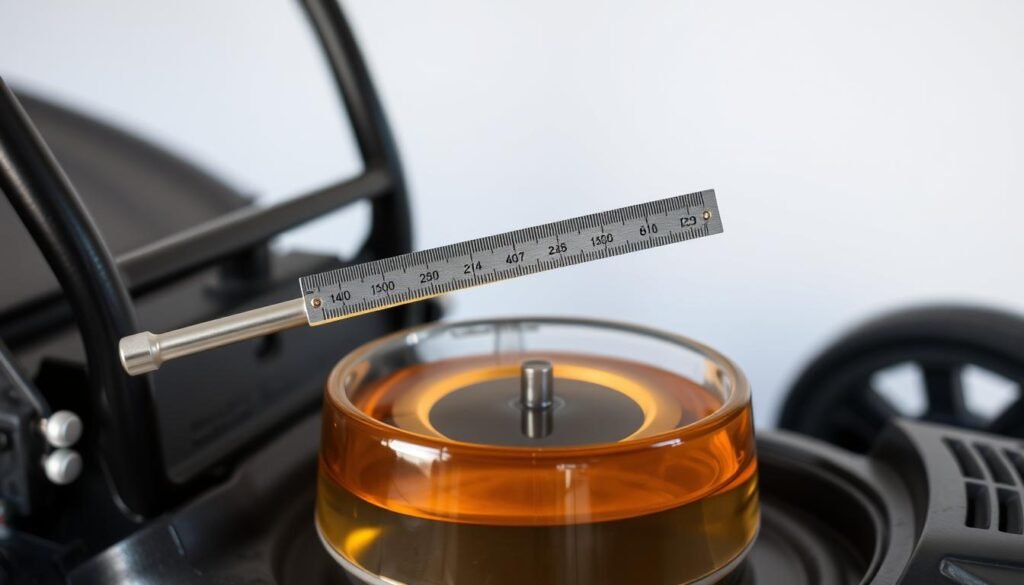
How to Check Your Oil Level Properly
Begin by parking your equipment on a flat surface. This prevents false readings from tilted positioning.
Locate and remove the dipstick cap carefully. Wipe the blade completely clean with a lint-free rag.
Reinsert the dipstick fully, ensuring the cap teeth align with tube grooves. Remove it again to check where the oil line falls between the “full” and “add” marks.
Add small amounts if the level is low. Wait for the lubricant to settle before rechecking.
Essential Tools and Supplies for Oil Change
Gather fresh engine oil of the correct type before starting. You will need a drain pan, socket wrench, and clean rags.
Models with filters require replacement parts specified in your manual. A funnel helps prevent spills during pouring.
Using quality components ensures proper filtration and lubrication. This protects internal engine components from damage.
Timing Your Oil Change for Optimal Performance
Walk-behind units need fresh lubricant every 50 hours or annually. Riding models require changes every 100 hours or once per year.
Check levels weekly during mowing season. Regular monitoring prevents running low between complete changes.
Following this schedule maintains engine health and reliability. Proper timing extends your equipment’s lifespan significantly.
Factors Impacting Your Lawn Mower’s Oil Capacity
Your equipment’s oil capacity isn’t just a fixed number—it’s influenced by your specific usage conditions. Several variables affect how much lubricant your machine needs and how it performs.
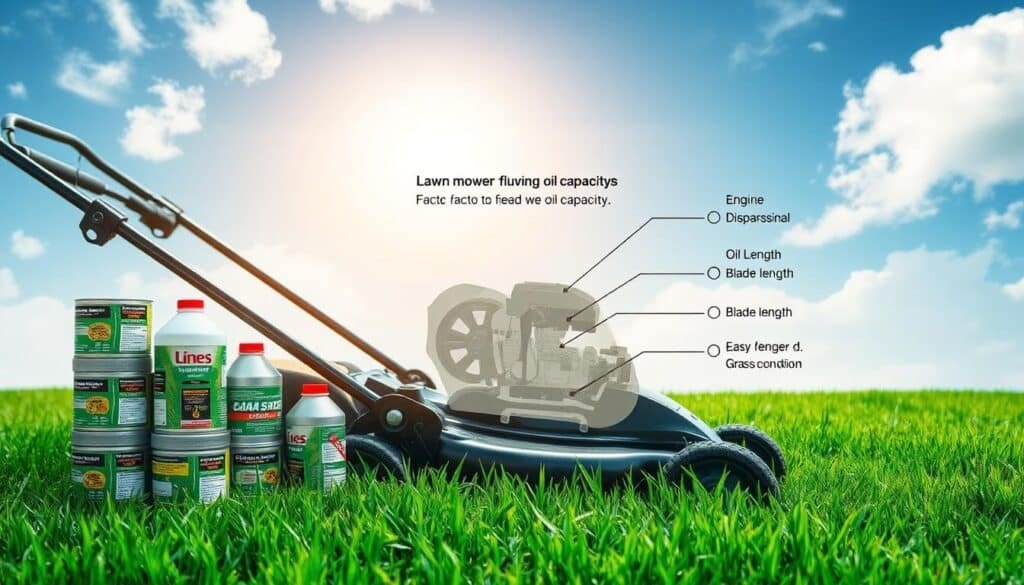
Understanding these factors helps you maintain optimal performance throughout the season. Your maintenance routine should adapt to these changing conditions.
Outdoor Temperature and Weather Conditions
Temperature extremes significantly impact your engine oil requirements. Cold weather below 40°F demands thinner formulations for easier starting.
In hot conditions above 80°F, multi-grade oils may increase consumption. You should monitor levels more frequently during temperature swings.
Your oil type selection must match seasonal conditions. Using SAE 30 in cold weather causes hard starting and potential strain.
Engine Specifications and Mower Design
Your equipment’s engine design directly affects capacity needs. Larger engines in riding models require substantially more lubricant than walk-behind units.
Design features like oil filters and cooling systems influence total capacity. Always consult your manual for specific specifications.
Commercial cutting service or extended use demands specialized formulations. Vanguard 15W-50 oil provides protection for continuous operation.
- Garden terrain affects engine workload
- Hilly yards and thick grass increase consumption
- Professional service requires more frequent checks
Conclusion
Proper fluid management stands as the cornerstone of dependable garden equipment operation. Your consistent attention to this essential maintenance task ensures reliable performance season after season.
You now possess the knowledge to select appropriate lubricants, check levels accurately, and perform timely service. Following manufacturer guidelines protects your engine investment and maintains cutting efficiency.
Regular maintenance extends your equipment’s lifespan and prevents costly repairs. This disciplined approach saves you significant time and frustration.
Whether for residential lawn care or professional use, these practices keep your mower running smoothly. Your commitment to proper oil service guarantees dependable operation every time you need it.
FAQ
What is the typical oil capacity for a standard push mower?
Most common walk-behind models hold between 0.5 and 0.7 litres. Always check your specific equipment’s manual for the precise capacity.
How do I find the correct amount for my specific model?
Your owner’s manual provides the exact capacity. You can also check the manufacturer’s website using your model number for accurate information.
What happens if I put too much lubricant in the engine?
Overfilling can cause serious damage. Excess fluid can lead to overheating, increased pressure, and engine seal failure. Always maintain the proper level.
Can I use the same type of engine oil in all my garden equipment?
Not necessarily. Different engines, like those in riding mowers versus string trimmers, may require different viscosity grades. Always use the oil type recommended for each machine.
How often should I perform an oil change on my mower?
A good rule is to change it every spring or after every 25-50 hours of cutting. For heavy use or dusty conditions, more frequent service is recommended.
What’s the best way to check the fluid level?
Ensure the machine is on a level surface. Remove the dipstick, wipe it clean, reinsert it fully, and then remove it again to get an accurate reading.
Does the outdoor temperature affect which oil I should use?
Yes, temperature impacts oil viscosity. Many manufacturers suggest a multi-grade oil like 10W-30 for a wide range of weather conditions.