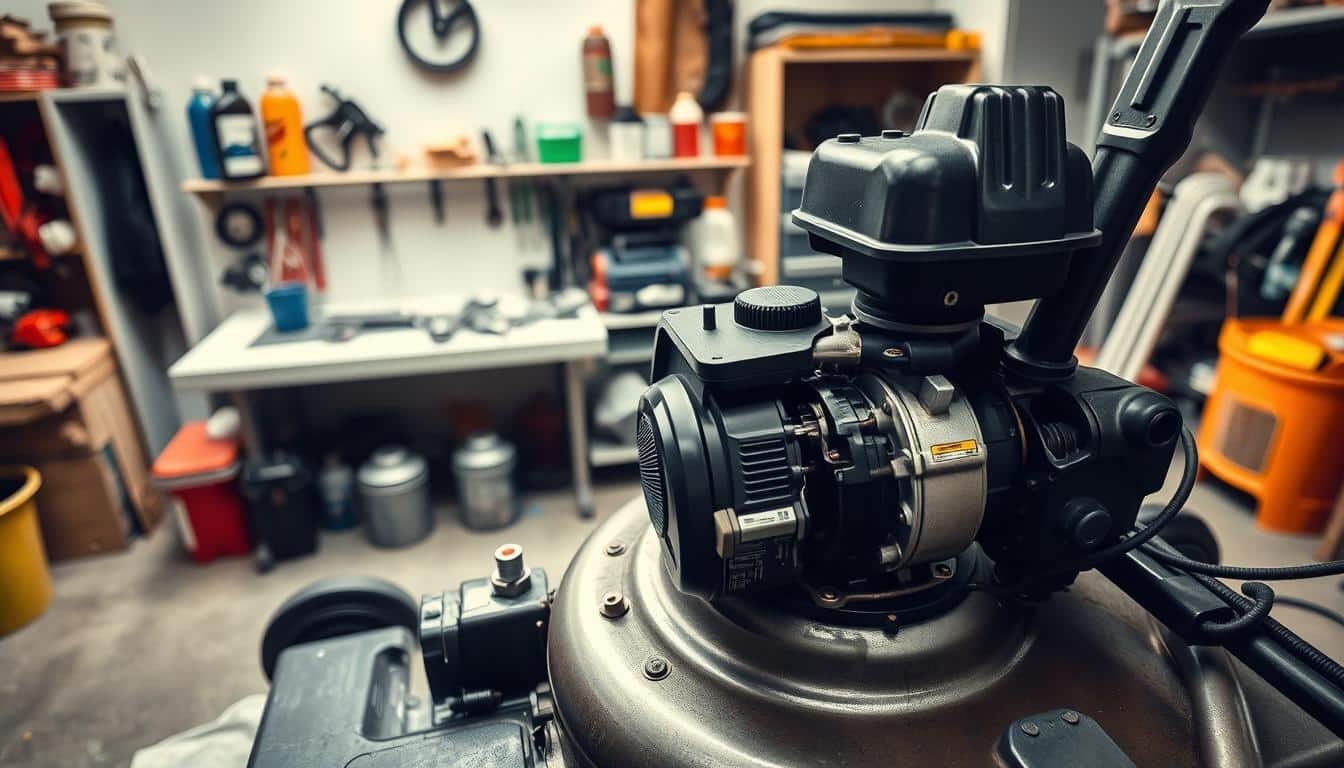
Have you ever wondered if the simple task of checking your lawn equipment’s oil could be the secret to a perfectly manicured lawn all season long?
Your mower’s engine is the heart of your lawn care routine. It works hard every time you tackle your yard. Proper lubrication is not just a suggestion; it is a necessity for smooth operation.
Using the correct amount of fluid protects the internal components from excessive wear. This simple act of maintenance prevents overheating and potential breakdowns. A well-cared-for machine ensures your grass gets a clean, even cut every time.
This guide provides clear, step-by-step instructions. You will learn to identify the right type of lubricant for your climate and engine model. We will cover how to check levels and perform a change correctly.
Understanding these fundamentals empowers you to protect your investment. Consistent care extends the life of your equipment significantly. You can avoid costly repairs and enjoy a reliable performance season after season.
Key Takeaways
- Correct oil levels are critical for optimal engine performance and longevity.
- Proper lubrication reduces friction and prevents engine overheating.
- Regular oil maintenance is a key task to avoid costly equipment repairs.
- Using the right oil type for your specific mower and climate is essential.
- Performing routine checks and changes ensures your mower runs smoothly.
- Understanding your mower’s needs leads to a healthier, well-maintained lawn.
Understanding Your Mower’s Engine and Oil Requirements
Your mower’s engine has unique characteristics that dictate its lubrication needs. Different equipment requires specific maintenance approaches. Understanding these differences is crucial for proper care.
Engine Types and Capacities
Walk-behind mowers typically feature smaller engines. These units usually hold between 15 and 18 ounces of fluid. Their compact design makes maintenance straightforward.
Riding mowers contain larger, more powerful engines. These engines need significantly more lubrication. Capacities often range from 48 to 64 ounces.
The exact amount depends on your specific engine model. Always check the manufacturer’s specifications. Your equipment’s operator manual provides the most accurate information.
The Importance of Using the Correct Oil
Selecting the proper oil type is essential for engine protection. Use high-quality detergent oil with specific service classifications. Look for ratings like SF, SG, SH, or SJ.
Modern oils contain all necessary protective compounds. Avoid adding special additives to your mixture. These can disrupt the oil’s balanced formulation.
Choosing the right product ensures optimal performance. It also helps maintain your manufacturer’s warranty. Proper lubrication extends your equipment’s lifespan significantly.
How to Choose the Right Oil for Your Mower
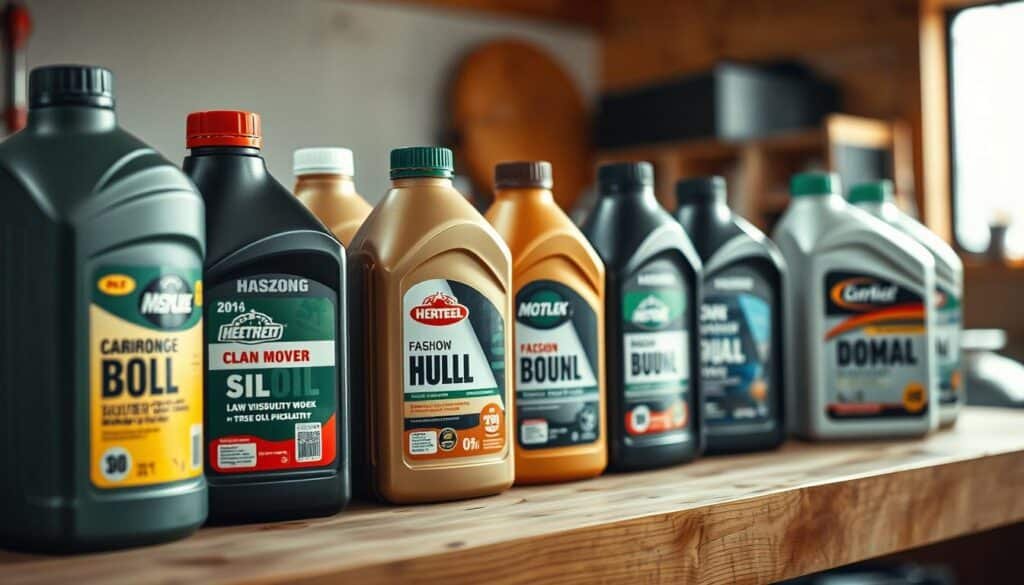
Choosing the right lubricant involves more than just grabbing any bottle off the shelf. Temperature conditions dictate the ideal formula for your equipment. The climate where you maintain your lawn determines which viscosity provides optimal engine protection.
Oil Type Recommendations Based on Temperature
Your local weather patterns guide lubricant selection. Different formulas perform better in specific temperature ranges. This table helps you match the proper type to your climate.
| Oil Type | Temperature Range | Best For | Considerations |
|---|---|---|---|
| SAE 30 | Above 40°F (4°C) | Warm summer conditions | Most common for small engines |
| SAE 10W-30 | 0°F to 100°F (-18°C to 38°C) | Varying climates | Monitor levels above 80°F |
| Synthetic SAE 5W-30 | -20°F to 120°F (-29°C to 49°C) | All-temperature protection | Superior starting performance |
| Vanguard 15W-50 | 20°F to 130°F (-7°C to 54°C) | Commercial lawn service | Continuous-use applications |
Synthetic Versus Conventional Oils
Synthetic formulas offer enhanced protection across broader temperature ranges. They provide easier cold-weather starting and reduced consumption.
Conventional oils work well for standard residential use. Both types require the same maintenance schedule. Always select high-quality detergent oils with SF, SG, SH, or SJ service ratings.
How much oil goes in a push mower: Determining the Correct Capacity
Determining the correct lubricant amount prevents both under-lubrication and overfilling issues. Walk-behind equipment typically requires between 15 and 18 ounces of fluid. Your specific model determines the exact measurement needed for optimal performance.
Consulting Your Operator’s Manual
Your operator’s manual provides the most accurate capacity information. Locate the engine model number on your equipment label. This number helps you find precise specifications for your lawn maintenance machine.
New equipment usually arrives without lubricant pre-added. You must fill it to the proper level before initial use. Following manufacturer guidelines ensures your investment receives proper care from day one.
Using the Oil Finder Tool Effectively
Manufacturer tools like Briggs & Stratton’s Oil Finder simplify the process. Input your equipment type, engine name, and local temperature range. The tool generates customized recommendations for your specific situation.
These digital resources provide exact capacity measurements and product suggestions. They help you purchase the correct amount for complete changes throughout the mowing season.
| Equipment Type | Typical Capacity Range | Key Consideration |
|---|---|---|
| Walk-Behind Mower | 15-18 ounces | Check dipstick regularly |
| Small Riding Mower | 48-54 ounces | Allow complete drainage |
| Large Riding Mower | 56-64 ounces | Use funnel for clean pouring |
Proper capacity specifications ensure efficient operation without lubrication issues. They protect your lawn equipment from damage while maintaining peak performance during grass cutting tasks.
Steps to Change and Check Your Mower Oil
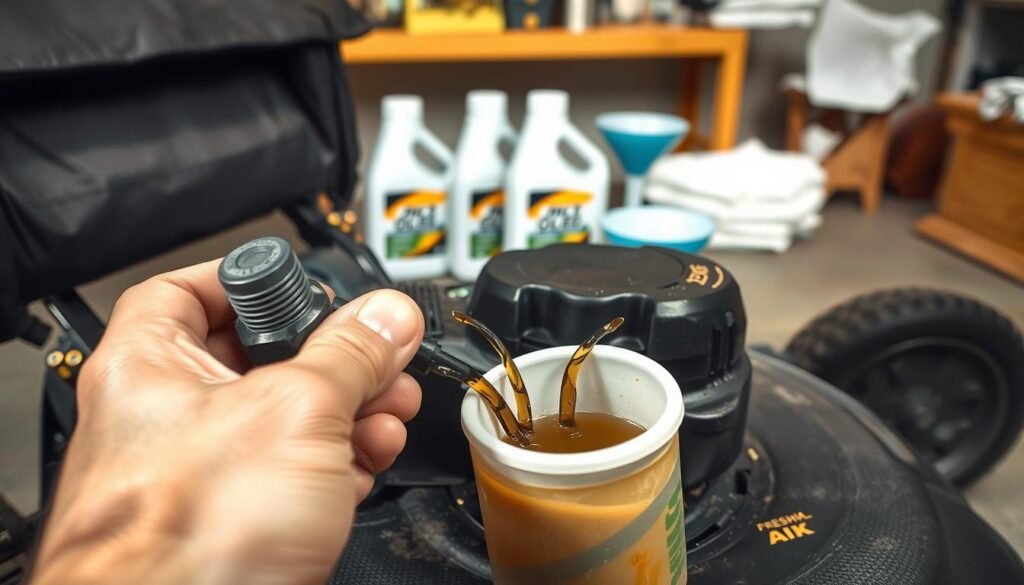
Performing routine maintenance on your lawn equipment is a straightforward process that ensures long-term reliability. Following the correct sequence of steps protects your engine and guarantees optimal performance.
This guide walks you through the essential tasks for a complete fluid replacement and regular level inspection.
Preparing Your Mower for an Oil Change
The first step for any maintenance is preparation. Always park your machine on a completely level surface. This ensures accurate readings and allows for complete drainage.
For a full change oil procedure, run the engine for a few minutes to warm the fluid. This makes it flow out more easily. Then, disconnect the spark plug wire for safety.
Draining, Refilling, and Checking Oil Levels
Place a container under the drain plug. Carefully tilt the mower to drain the old fluid completely. Dispose of it responsibly at a recycling center.
Refill with the recommended type, pouring a few ounces at a time. Check the level frequently using the dipstick to avoid overfilling.
To check oil levels accurately, wipe the dipstick clean, reinsert it fully, and remove it again. The level should be between the full and add marks. Allow time for new fluid to settle before a final check.
This simple maintenance change protects all internal parts and keeps your gas-powered equipment running smoothly for seasons to come.
Conclusion
Your commitment to understanding and applying correct lubrication practices pays dividends in equipment longevity and lawn quality. Proper oil lawn mower care ensures your machine delivers consistent performance throughout the growing season.
Understanding specific oil lawn requirements protects your engine investment. This knowledge prevents costly repairs from improper lubrication. Your mower depends on the right type and amount of mower oil for efficient operation.
Following manufacturer recommendations for capacity and viscosity maximizes your lawn mower lifespan. Consistent maintenance keeps your equipment running smoothly. Whether you choose conventional or synthetic mower oil, regular checks are essential.
This knowledge empowers you to manage your oil lawn mower care confidently. You reduce reliance on professional service while ensuring reliable starts. The time invested in proper oil lawn maintenance protects your engine and maintains a beautiful lawn.
Your dedication to proper oil care transforms routine tasks into valuable investments. This approach guarantees peak performance for your mower and outstanding results for your landscape.
FAQ
What is the typical oil capacity for a push mower engine?
Most standard push mower engines, like those from Briggs & Stratton or Honda, hold between 15 and 20 ounces of oil. However, capacity varies by model. Always check your operator’s manual for the exact specification for your equipment.
How do I check the oil level in my lawn mower?
Ensure your mower is on a level surface. Locate the dipstick, remove it, and wipe it clean. Reinsert it fully, then pull it out again to check the level. The oil should be between the “Full” and “Add” marks on the dipstick.
What type of oil should I use in my gas mower?
Use a high-quality detergent oil classified as API service SG, SH, SJ, or higher. For most conditions, SAE 30 is recommended. In colder temperatures, a 10W-30 oil is often better. Synthetic oils, like those from Mobil 1, offer superior protection for your engine.
How often should I perform an oil change on my mower?
You should change the oil after the first five hours of operation on a new mower. After that, change it every 50 hours or at least once each mowing season. Regular maintenance is key to engine longevity.
Can I use car engine oil in my lawn mower?
It is not recommended. Many automotive oils contain additives that can harm small engines. Always use oil specifically designed for small engines, such as Briggs & Stratton lawn mower oil, to ensure proper lubrication and performance.
What happens if I overfill the oil in my mower?
Overfilling can cause serious damage. Excess oil can lead to overheating, hard starting, excessive smoke, and even engine seal failure. If you overfill, drain the excess until the level is correct on the dipstick.