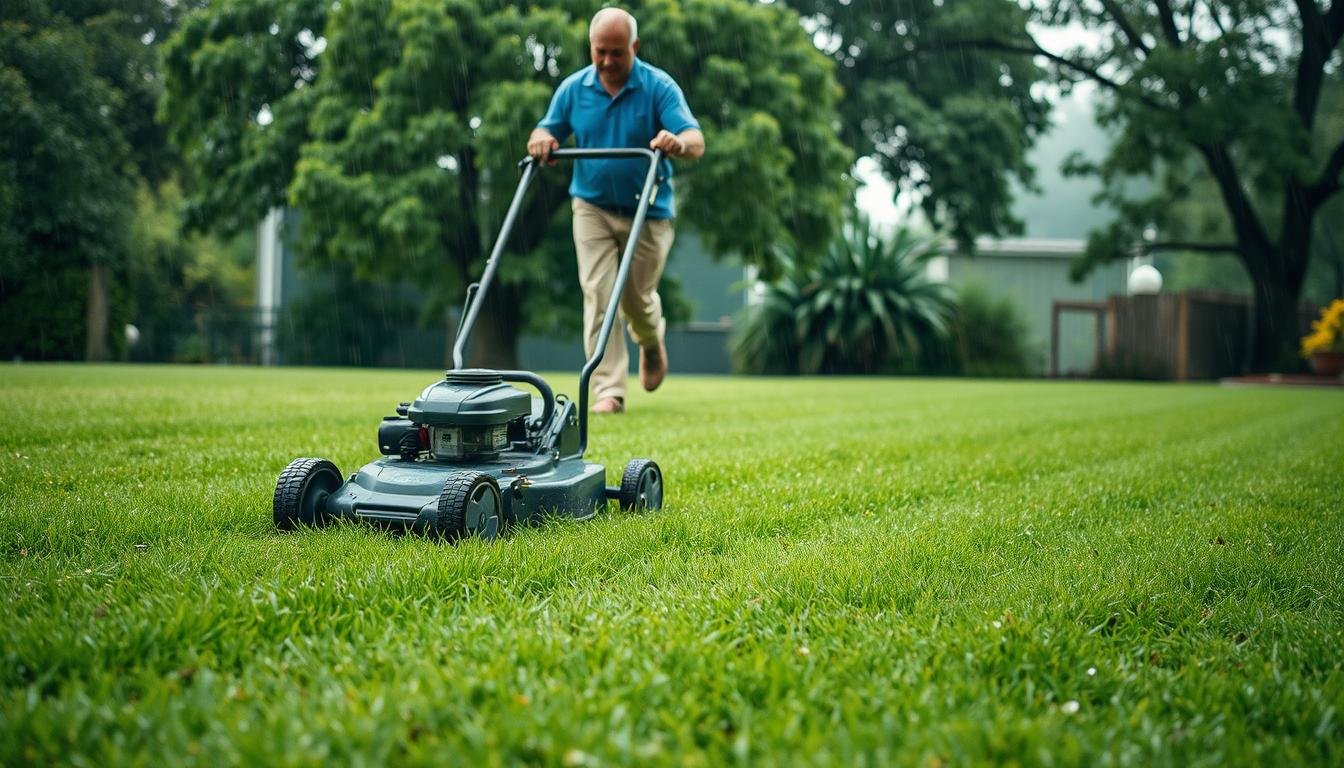
Have you ever glanced at your soaked lawn after a morning downpour and wondered if you could just get the trimming done anyway? Many homeowners face this exact dilemma, caught between a busy schedule and the desire for a well-kept yard.
While pushing a mower across damp turf might seem like a quick solution, this choice carries significant consequences. Your lawn’s health and your own safety are on the line. Understanding the proper mowing practices for different conditions is crucial for maintaining a vibrant and healthy landscape.
This guide explores the real impact of cutting wet grass. You will learn about the potential for tearing your grass, creating an uneven cut, and even harming the soil underneath your lawn. We will also cover the risks to your equipment and personal safety.
Making an informed decision saves you time and prevents long-term damage. Let’s dive into the facts so you can care for your property with confidence.
Key Takeaways
- Mowing a damp lawn can severely damage the grass blades, leading to a ragged, unhealthy appearance.
- Wet conditions cause grass clippings to clump, clogging your mower and creating an uneven cut.
- Soil compaction is a major risk, which can choke your lawn’s root system and hinder growth.
- Operating machinery on slippery grass increases the chance of personal injury.
- Damp environments can promote the spread of fungal diseases across your turf.
- Patience often yields the best results for both the immediate look and long-term health of your lawn.
Understanding Wet Grass and Its Impact on Your Lawn
The presence of moisture fundamentally alters how your grass responds to cutting equipment. Water adds significant weight to each blade, changing their physical behavior completely.
What Happens to Wet Grass?
Damp grass blades bend over under water’s heavy load. They clump together instead of standing upright for a clean cut.
This bending causes many blades to be missed by passing mowers. The result is tearing rather than cutting, leaving brown tips and ragged edges.
| Property | Dry Grass | Wet Grass |
|---|---|---|
| Blade Position | Upright and uniform | Bent and clumped |
| Cutting Result | Clean, even cuts | Torn, ragged edges |
| Clipping Behavior | Even distribution | Clumping and sticking |
| Disease Risk | Low susceptibility | High infection potential |
Long-Term Effects on Lawn Health
Repeated cutting of damp turf leads to soil compaction. This suffocates roots by cutting off their oxygen supply.
Damaged blades in moist conditions create perfect environments for fungal diseases. Your lawn becomes more vulnerable to infections over time.
Proper timing prevents these long-term health issues. Understanding these physical changes helps you make better lawn care decisions.
is it okay to mow the grass when wet: Answering Your Questions
After a rain shower, your lawn care schedule may conflict with ideal cutting conditions. The direct answer to the title question is yes, you can proceed with trimming damp turf. However, this approach comes with significant drawbacks that affect both appearance and health.
Waiting for proper drying yields superior results. A good rule suggests allowing at least 24 hours after rainfall before starting your equipment.
Dry vs. Wet Mowing: A Side-by-Side Comparison
Dry conditions allow for clean, precise cutting. Each blade stands upright for even trimming across your entire lawn.
Damp turf creates challenges. Moisture causes blades to bend and clump together. This leads to uneven results and potential tearing rather than clean cuts.
Your equipment performs better in dry circumstances. Clippings distribute evenly without clogging the mower deck.
Debunking Common Myths
Some believe morning dew poses no problem for maintenance. Actually, even light moisture affects cutting quality and can spread disease.
Another misconception suggests that a quick pass won’t cause harm. Repeated cutting of damp grass weakens the root system over time.
Test your lawn’s readiness by walking across the surface. If footprints remain visible, wait longer before starting your work.
Risks and Safety Hazards When Mowing Wet Grass
The decision to trim moist vegetation carries serious personal injury concerns. Statistics from the U.S. Consumer Product Safety Commission reveal alarming numbers: over 250,000 people received treatment for lawn mower injuries in a single year. Annually, approximately 80,000 emergency room visits result from accidents involving this equipment.
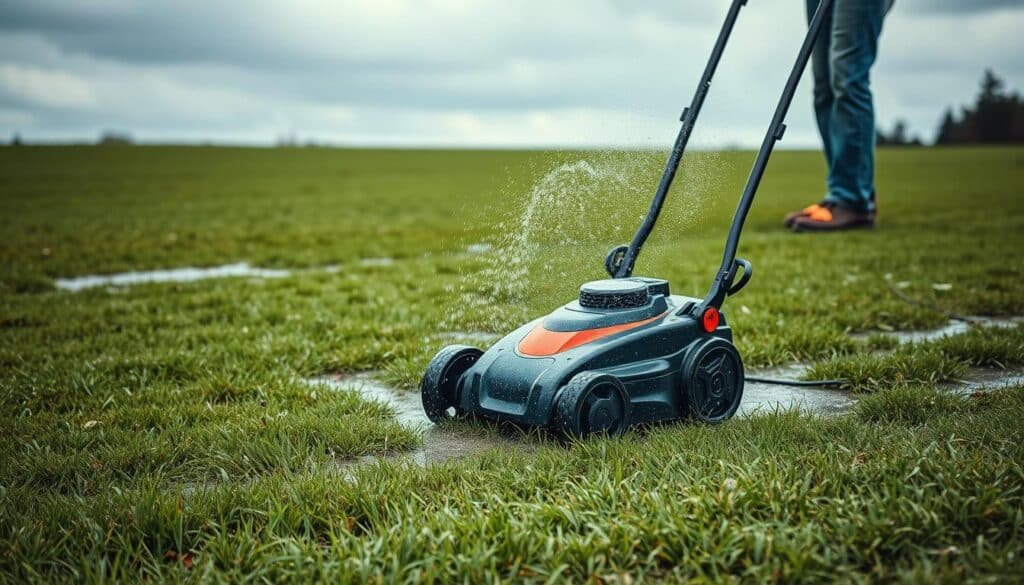
Damp surfaces create slippery conditions that dramatically increase accident potential. Your footing becomes unstable, turning routine maintenance into hazardous activity. This risk intensifies on sloped or uneven terrain where traction diminishes significantly.
Increased Slipperiness and Injury Potential
Electric models present additional dangers in moist environments. Corded equipment creates shock hazards when water contacts electrical components. Even battery-powered units may suffer damage from moisture exposure.
Steep slopes become particularly treacherous under saturated conditions. The combination of wet soil and slick grass makes controlling your equipment challenging. Losing grip on inclines can lead to serious accidents with potentially severe consequences.
| Safety Factor | Dry Conditions | Wet Conditions |
|---|---|---|
| Footing Stability | Secure traction | High slip risk |
| Equipment Control | Full maneuverability | Reduced control |
| Electric Hazard | Minimal risk | Significant danger |
| Slope Safety | Manageable risk | Extreme hazard |
Assessing your property’s specific characteristics helps determine appropriate caution levels. Consider slope steepness, terrain consistency, and your mower type before proceeding with maintenance in questionable weather.
Protecting Your Mower from Wet Conditions
The mechanical components of your mower suffer greatly when forced to work through moist vegetation. Professional landscapers avoid this practice to protect their expensive equipment from premature wear.
Damp clippings create clumps that block airflow under the mower deck. This restriction forces the engine to work harder, leading to potential overheating.
Preventing Blade Dulling and Engine Strain
Wet grass accelerates wear on cutting blades significantly. The moisture acts like an abrasive, dulling the sharp edges much faster than dry conditions.
Your mower blades struggle against clumped, heavy vegetation. This resistance puts extra strain on the engine, potentially causing smoking or stalling.
Proper equipment maintenance begins with avoiding unnecessary stress conditions. Protecting your investment means understanding when not to use it.
Electric models face particular challenges with lower torque capabilities. They work harder to power through thick, damp turf compared to gas-powered alternatives.
| Component | Dry Conditions | Wet Conditions |
|---|---|---|
| Mower Blades | Normal wear rate | Accelerated dulling |
| Engine Performance | Optimal operation | Increased strain |
| Deck Cleanliness | Easy maintenance | Frequent clogging |
| Corrosion Risk | Minimal concern | High potential |
Moisture accumulation promotes rust on metal components. Regular cleaning after use in questionable conditions prevents long-term damage.
Understanding these mechanical stresses helps you make informed decisions about lawn care timing. Your equipment’s longevity depends on proper usage practices.
Effective Mowing Techniques for Wet Conditions
When unavoidable scheduling conflicts demand attention to a saturated lawn, specific techniques can minimize potential harm. These approaches help you navigate challenging circumstances while protecting your landscape.
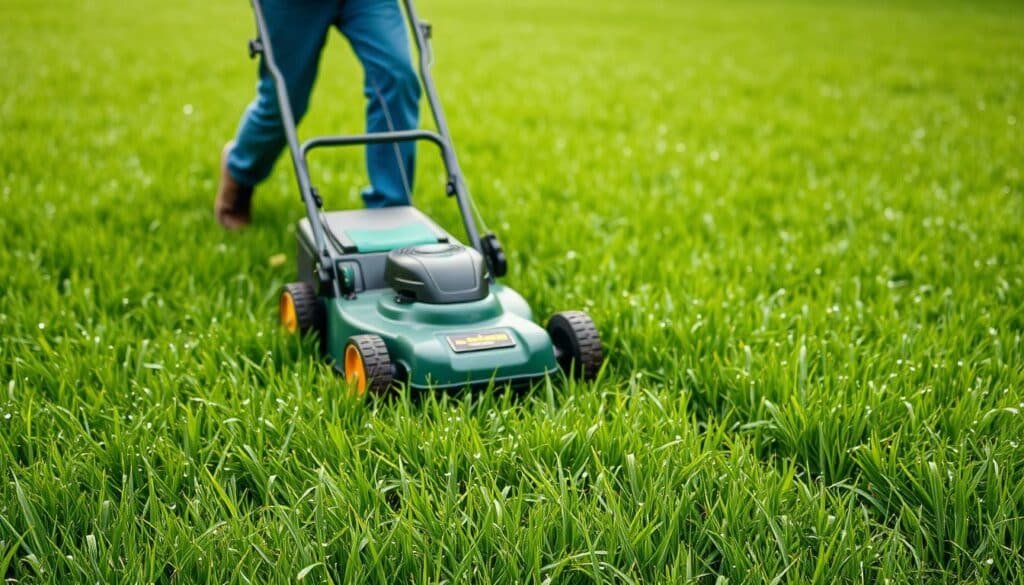
Proper preparation makes a significant difference in these difficult conditions. Starting with sharp blades ensures cleaner results rather than tearing vegetation.
Optimizing Mower Settings for a Cleaner Cut
Raise your cutting height to the highest setting available. Research from Kansas State University supports this approach for better performance.
Follow the one-third rule strictly. Remove only the top portion of each blade to reduce stress on both plants and equipment.
Move at a slower pace than usual. This gives mowers more time to process heavy, damp vegetation effectively.
| Technique | Standard Practice | Wet Conditions Approach |
|---|---|---|
| Cutting Height | Normal setting | Highest possible setting |
| Mowing Speed | Regular pace | Slow, deliberate movement |
| Discharge Method | Mulching or bagging | Side discharge preferred |
| Blade Maintenance | Regular sharpening | Extra-sharp blades essential |
Choose side discharge over mulching or bagging attachments. Wet clippings tend to clump and cause deck clogging issues.
These practical tips for mowing wet turf help you achieve acceptable results when postponement isn’t feasible. Regular cleaning stops prevent buildup and maintain equipment function.
Managing Clumping and Clogged Mower Decks
Dealing with clumpy grass residue represents one of the most common frustrations during damp lawn maintenance. Moisture causes individual blades to stick together, creating stubborn masses that clog equipment.
Proper preparation significantly reduces these challenges. Start with a clean mower deck before each session with saturated turf.
Tips for Preventing Grass Clumps
Apply a silicone-based spray to create a non-stick surface on your equipment. This barrier prevents wet grass from adhering to metal components.
Empty collection bags frequently during operation. Heavy, moisture-laden clippings add substantial weight that strains your mower.
| Prevention Method | Standard Conditions | Wet Conditions Approach |
|---|---|---|
| Deck Coating | Optional | Essential non-stick spray |
| Bag Emptying | After completion | Every 10-15 minutes |
| Cutting Pattern | Standard passes | Double-cutting technique |
| Clipping Removal | Optional raking | Mandatory cleanup |
Strategies to Keep the Mower Deck Clean
Schedule regular stops to clear accumulated vegetation. Purdue University research supports the double-cutting method for breaking up stubborn masses.
Frequent deck maintenance prevents long-term damage and ensures consistent cutting performance across your entire property.
Remove any remaining clumps from your lawn surface after finishing. These decomposing masses can kill underlying vegetation and promote thatch buildup.
Strategic equipment handling transforms frustrating clumping into manageable maintenance. Your proactive approach protects both machinery and landscape health.
Lawn Health Maintenance Post-Mowing
Your landscape’s recovery process begins immediately following maintenance on moist turf. Proper care during this critical period prevents long-term damage to your property.
After working with saturated conditions, monitor your lawn closely for early warning signs. Look for soil compaction, fungal development, and thatch buildup resulting from the challenging conditions.
Proper Grasscycling and Mulching Practices
Grasscycling becomes ineffective with damp vegetation. Wet clippings form dense masses instead of distributing evenly across your lawn.
These clumps block essential sunlight and airflow. They can suffocate underlying grass and create ideal environments for fungal diseases.
Watch for specific symptoms like brown patch and dollar spot. These common disease issues thrive in moist conditions following improper maintenance.
Soil compaction often requires aeration to restore oxygen flow to roots. This process relieves pressure caused by equipment weight on wet soil.
Persistent moisture combined with clumping can lead to visible ruts and uneven terrain. Address these issues promptly to maintain your landscape’s health and appearance.
Additional Tips for Mowing in Changing Weather
Rainfall timing directly impacts when you should plan your next lawn care session. Developing weather-responsive strategies helps you maintain a healthy landscape throughout seasonal changes.
Flexible scheduling prevents damage to your property. These practical approaches balance maintenance needs with ideal cutting conditions.
Adjusting Mowing Schedules Based on Rainfall
Wait two to five hours after light precipitation before starting your equipment. Heavy storms require a full day of drying for optimal results.
Simple field tests determine if your turf is ready. Walk across the surface and check for visible footprints or damp shoes.
Mid-morning and late afternoon offer the best windows for maintenance. These times avoid natural moisture from morning dew or evening condensation.
Waterlogged conditions demand immediate postponement. Saturated soil creates ruts and compacts easily under equipment weight.
Regional rainfall patterns influence your scheduling decisions. Areas with frequent precipitation need more flexible maintenance routines.
Recognizing these signs protects both your lawn’s appearance and underlying soil structure. Proper timing ensures clean cuts and healthy growth.
Conclusion
Your final choice about timing your lawn care directly impacts both immediate appearance and long-term turf health. While trimming damp vegetation remains technically possible, waiting for proper drying yields superior results every time.
Multiple factors support this patient approach. Wet conditions increase safety hazards and equipment strain significantly. They also promote disease spread and cause uneven cutting that damages your lawn’s vitality.
Real-world scheduling sometimes demands less-than-ideal maintenance decisions. When unavoidable circumstances arise, applying the proper techniques minimizes negative outcomes. Your knowledge empowers confident choices that balance practicality with landscape protection.
Prioritize safety above all lawn care tasks. Apply these strategies to maintain healthy, attractive turf despite challenging weather patterns throughout the seasons.
FAQ
What are the immediate effects of cutting wet grass?
Mowing wet grass leads to uneven cuts and tearing. The moisture weighs down the blades, preventing a clean trim. This can leave your lawn looking ragged and increase the risk of disease.
How does mowing in wet conditions affect my lawn mower?
Wet conditions put extra strain on your mower’s engine and can quickly dull the blades. Wet clippings clump together, clogging the mower deck and potentially causing damage over time.
Are there specific safety risks when mowing a wet lawn?
Yes, the risk of slipping on wet soil is significantly higher. Wet grass and muddy conditions reduce traction, increasing the chance of injury from losing control of the machine.
What is the best way to handle grass clumps after mowing wet?
To manage clumps, use a rake to break them up and spread them out thinly. This prevents them from smothering the grass underneath and allows them to decompose more quickly.
Can mowing wet grass lead to lawn diseases?
Absolutely. Tearing the grass blades creates open wounds where fungal spores, like those causing brown patch, can easily enter and infect your lawn.
Should I bag or mulch clippings when the grass is wet?
Bagging is often the better choice for wet grass. Mulching can be ineffective as the heavy, wet clippings clump instead of being finely chopped and returned to the soil.
How long should I wait to mow after it rains?
It’s best to wait until the lawn is mostly dry. This could be a few hours after a light shower or a full day after heavy rain, depending on sun and wind conditions.