Have you ever glanced at your rain-soaked yard, knowing your mowing schedule is due, and wondered if a quick trim would really hurt? Many homeowners face this exact dilemma. The convenience of sticking to a routine can be tempting, especially after a spring shower or a heavy morning dew.
This choice, however, carries significant consequences for the health of your turf. Your lawn care equipment and even your personal safety can be compromised. What appears to be a time-saver can quickly lead to a series of frustrating problems.
This guide explores the main issues linked to cutting damp turf. You will learn about uneven cuts that leave your grass looking ragged. We will discuss how moisture can encourage the spread of lawn diseases. Potential damage to your mower and important safety hazards will also be covered.
Our goal is to provide clear, practical knowledge. By the end, you will understand the risks and possess solutions for those rare times when cutting the grass cannot be postponed. Making informed decisions will help you maintain a vibrant, healthy lawn throughout the year.
Key Takeaways
- Cutting damp grass often results in an uneven, torn appearance instead of a clean cut.
- Excess moisture creates a perfect environment for fungal diseases to spread across your lawn.
- Your mower can suffer from clogging, rust, and reduced efficiency when used on wet grass.
- Wet conditions increase the risk of slipping and other safety hazards during lawn care.
- Understanding the proper timing for mowing is crucial for long-term lawn health.
- There are specific techniques you can use if you absolutely must mow under less-than-ideal conditions.
Introduction to Mowing Wet Grass
That familiar feeling of a damp lawn underfoot often creates a lawn care dilemma. Morning dew or a recent downpour can leave your turf saturated, tempting you to stick to your schedule. Understanding the moisture level of your grass is the first step toward making a smart decision.
Water clinging to each blade changes the entire cutting environment. Your equipment interacts differently with the turf, leading to potential issues. Patience is your greatest tool in these situations.
A simple rule helps guide your timing. Wait two to five hours after a light shower. Allow a full day for the lawn to dry following heavier rainfall. This waiting period gives excess water time to evaporate.
You can perform a quick test to check conditions. Walk across your property and observe your footsteps. If the impressions remain visible, the ground holds too much moisture for cutting.
While you cannot control the weather, you can control your response. Proper timing prevents most problems associated with cutting damp turf. Sometimes, extended rainy periods make waiting difficult, which requires specific techniques covered later.
Why is it bad to mow wet grass
Cutting your property after rainfall or heavy dew initiates a chain reaction of problems that compromise turf health. The moisture fundamentally changes how your equipment interacts with the vegetation.
Understanding the Core Issues
Water droplets cause individual blades to bend under their weight. Your mower passes over these flattened stems without making contact.
This missed cutting action creates uneven results across your landscape. More importantly, the blades that do get trimmed suffer tearing rather than clean slicing.
Jagged edges appear brown and create entry points for pathogens. The rough finish makes your entire property vulnerable.
Key Consequences for Your Lawn
One problem quickly leads to another in a damaging cycle. Torn vegetation allows disease organisms to establish themselves.
Clippings clump together instead of dispersing evenly. These wet masses block sunlight and reduce air circulation.
Soil beneath becomes compacted from the extra weight of machinery on saturated ground. Root development suffers as oxygen levels drop.
These issues represent serious threats that can require extensive correction later. Professional landscapers consistently recommend waiting for dry conditions.
Damage to Your Lawn’s Health
The immediate consequences of cutting your turf after rainfall extend far beyond just a messy appearance. Moisture fundamentally changes how your equipment interacts with the vegetation, creating lasting problems.
Uneven Cutting and Tearing
Water weight causes individual blades to bend rather than stand upright. Your mower passes over these flattened stems without making proper contact.
This results in torn edges instead of clean cuts. The ragged tips turn brown and create entry points for pathogens.
Your property develops a patchy, uneven look that becomes more noticeable as the vegetation dries. These torn surfaces take longer to heal, leaving your landscape stressed for weeks.
Soil Compaction and Brown Patch Formation
Heavy equipment on saturated ground presses down, eliminating air pockets. Roots struggle to access oxygen and nutrients in compacted soil.
Wet clippings form dense clumps that block sunlight and airflow. This creates ideal conditions for fungal diseases to establish.
Common infections like brown patch can spread rapidly across your entire property. These diseases require expensive treatments and may kill large turf sections if untreated.
The damage from one session can persist for months, potentially requiring aeration and overseeding for recovery.
Impact on Your Lawn Mower and Equipment
Your lawn equipment faces serious threats when used on saturated turf, with consequences that extend beyond just lawn health. The moisture creates mechanical challenges that accelerate wear and tear.
Clogged Mower Deck and Rust Issues
Damp clippings form heavy masses that stick to your mower’s underside. These clumps block airflow around the blades and discharge chute.
Moisture penetrates metal components, initiating corrosion processes. Your mower blades and deck can develop rust after just one session.
Electric models face particular vulnerability due to limited torque. They struggle with resistance from wet, clumped vegetation.
Engine Overload and Reduced Performance
When blades encounter resistance, your engine works harder than designed. This strain can lead to overheating or complete failure.
Fuel efficiency drops significantly during these sessions. You’ll notice reduced cutting power and uneven results.
Bagging systems fill quickly with heavy, wet material. Constant stopping to clear blockages turns a quick job into hours of frustration.
| Equipment Issue | Effects When Mowing Wet Grass | Effects When Mowing Dry Grass |
|---|---|---|
| Blade Performance | Struggles with clumps, reduced efficiency | Clean cuts, optimal operation |
| Engine Strain | Overheating risk, fuel waste | Normal operation, good efficiency |
| Rust Formation | Rapid corrosion, component damage | Minimal risk, longer lifespan |
| Cleaning Requirements | Extensive cleaning needed after use | Simple maintenance, quick cleanup |
Regular sessions with damp vegetation shorten your equipment’s lifespan. Proper timing prevents these expensive problems.
Safety Hazards When Mowing Wet Grass
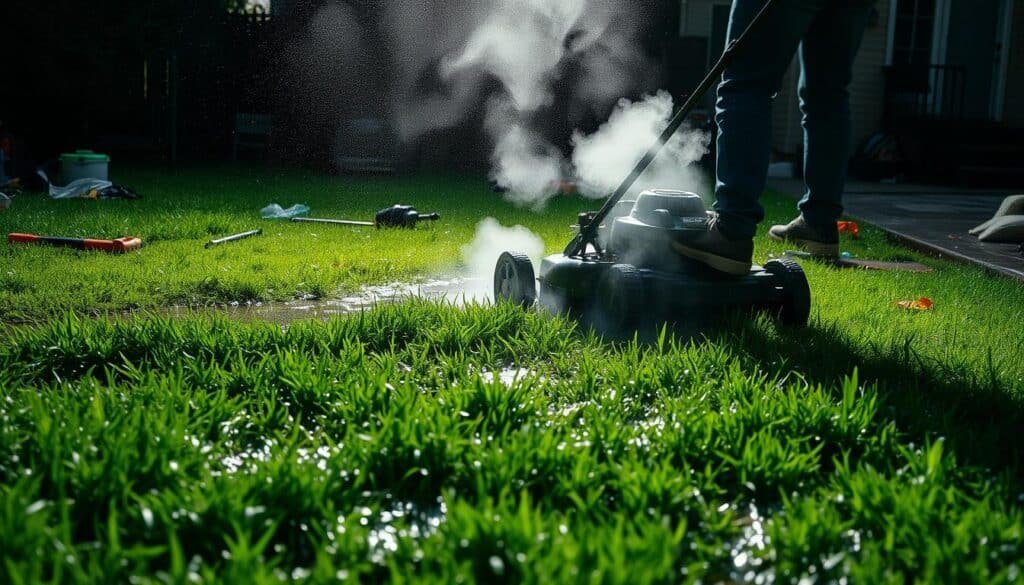
Emergency room statistics reveal the sobering reality of accidents involving lawn maintenance on moist grass. Over 80,000 people require emergency treatment annually for mower-related injuries according to the U.S. Consumer Product Safety Commission. Wet conditions significantly increase this safety risk.
Saturated turf creates a dangerously slippery surface that compromises your footing. This hazard becomes especially pronounced on slopes or uneven terrain where maintaining balance becomes difficult.
Slippery Surfaces and Increased Injury Risk
Your property transforms into a potential slip-and-slide when moisture accumulates. Losing footing while operating machinery can lead to serious falls or contact with moving blades.
Electric models present additional dangers in these conditions. Water and electricity create a lethal combination that can cause severe shock hazards.
Riding equipment loses traction on slick grass, particularly on inclines. This loss of control may result in the mower sliding sideways or even rolling over.
Tall, damp vegetation obscures ground-level hazards like toys, rocks, or sprinkler heads. Striking these objects can launch dangerous projectiles or damage equipment.
The physical strain of pushing heavy machinery through resistant turf increases fatigue. This exhaustion further reduces coordination and reaction time.
No lawn appearance justifies risking personal safety. Waiting for dry conditions eliminates these hazards while making the task more efficient.
How to Mow Wet Grass Safely When Necessary
There are situations where waiting for completely dry conditions simply isn’t practical for your landscape maintenance. Extended rainy periods can create scheduling challenges that require special precautions.
When you must address your property during damp conditions, proper preparation makes all the difference. These methods help minimize potential damage to your turf and equipment.
Adjusting Mower Settings and Techniques
Begin with sharp blades that create cleaner cuts on moisture-heavy vegetation. Set your cutting height to the highest possible position for better results.
Move at a slower pace than usual to allow the equipment to handle the heavier load. This approach reduces strain on your machine’s engine.
| Setting Adjustment | Benefit for Damp Conditions | Recommended Approach |
|---|---|---|
| Blade Sharpness | Cleaner cuts, less tearing | Sharpen before each session |
| Cutting Height | Reduced clumping, better airflow | Highest setting available |
| Mowing Speed | Even cutting, less engine strain | 50% slower than normal pace |
| Discharge Method | Prevents clogging issues | Side discharge preferred |
Maintenance and Cleaning Tips
Apply a non-stick coating to your mower deck before starting. This prevents damp clippings from adhering to surfaces.
Stop frequently to clear accumulated vegetation from the blade area. Regular cleaning prevents major blockages that require extensive disassembly.
Wait several hours after light precipitation or a full day following heavy rainfall. This timing represents the best compromise between necessity and ideal conditions.
Post-Mowing Lawn Care and Recovery
Your work is not complete once the mower is stored away. The immediate aftermath of cutting damp turf requires specific attention to prevent long-term issues.
Proper follow-up care can mean the difference between a minor setback and significant damage. Addressing clumps and soil compaction promptly protects your landscape’s health.
Managing Clippings to Prevent Thatch
Damp cuttings often form heavy clumps on your property. If left untouched, these masses decompose and smother the vegetation underneath.
This process creates dead patches and contributes to thatch buildup. A dense layer forms on the soil, blocking essential water and nutrients from reaching the roots.
Act quickly to break up or remove these clumps. Use a rake to spread them evenly or collect them for composting. A second pass with your equipment, once the area is drier, can also help distribute the material.
Aeration and Soil Recovery
Machinery on saturated ground often leads to soil compaction. This pressing action eliminates air pockets, stressing the root system.
Core aeration serves as the most effective remedy. This process removes small plugs of soil at regular intervals.
It creates channels that allow air, water, and nutrients to penetrate deeply. Improved drainage helps your property recover from the stress of being cut under less-than-ideal conditions.
Wait at least 24 to 48 hours after rain before attempting aeration. This timing ensures the ground is workable and prevents further damage.
Conclusion
Armed with comprehensive knowledge, you can now approach lawn maintenance with greater confidence. The evidence clearly shows that cutting damp turf creates multiple problems that compromise your entire landscape.
Patience remains your most valuable tool for achieving optimal results. Waiting for dry conditions prevents torn blades, soil compaction, and equipment strain. This simple practice protects your investment in both your property and machinery.
For homeowners facing challenging weather patterns, professional services offer a reliable alternative. Experts possess the equipment and experience to handle various conditions safely.
Your commitment to proper timing will reward you with a healthier, more vibrant outdoor space. Making informed decisions eliminates unnecessary risk while ensuring consistent, quality results season after season.
FAQ
Can I cut wet grass if I’m in a hurry?
It’s strongly discouraged. While possible, cutting wet grass often leads to clumping, an uneven cut, and potential damage to your lawn mower. The risks typically outweigh the time saved.
How long should I wait to mow after rain?
You should ideally wait until the grass is completely dry. This can take anywhere from a few hours to a full day, depending on sunlight, temperature, and wind. Walking on the lawn without leaving footprints is a good test.
What happens to my lawn mower blades when mowing wet grass?
A> Wet grass clippings are heavy and sticky. They clump together, clogging the mower deck and sticking to the underside. This can strain the engine, reduce cutting performance, and lead to rust on the blades and deck.
Does mowing a wet lawn cause diseases?
Yes. Wet conditions and torn grass blades create a perfect environment for fungal diseases like brown patch. Mowing wet grass can spread these spores across your lawn, leading to widespread damage.
Is it dangerous to operate a lawn mower on wet grass?
Absolutely. Wet grass creates a slippery surface, increasing the risk of slips and falls. This is a major safety hazard, especially on slopes. Electric mowers pose an additional risk of electric shock.
What should I do if I absolutely must mow wet grass?
If you have no choice, take precautions. Ensure your mower blade is sharp, set the cutting height higher, and mow slowly. Always clean the mower deck thoroughly immediately after use to prevent rust and clogging.