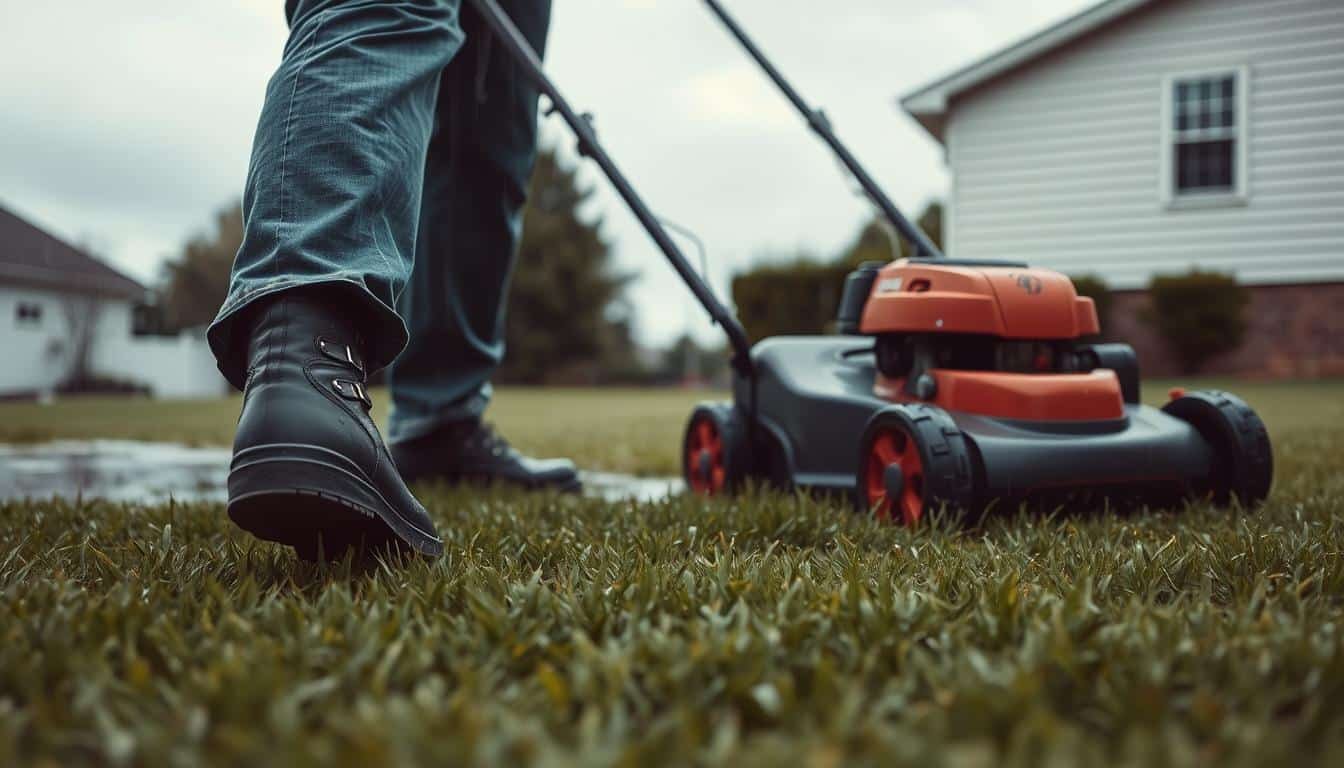
Is that lush, green carpet in your yard actually a hidden danger zone when damp? Many homeowners face this dilemma after a rain shower. The grass keeps growing, but the ground remains soggy.
While possible to operate your mower on damp turf, this task comes with significant risks. Wet grass clippings clump together, creating an uneven cut. Your equipment faces potential damage from clogged decks and strained engines.
Personal safety becomes a major concern on slippery surfaces. However, extended rainy weather sometimes leaves no choice. Letting the turf grow too tall creates bigger problems.
This guide provides essential safety tips and techniques for these challenging situations. You will learn how to assess conditions, protect your lawn’s health, and operate machinery safely. We combine expert recommendations from institutions like Purdue University with practical experience.
Key Takeaways
- Mowing damp turf is possible but requires special precautions.
- Wet conditions present safety hazards for both people and equipment.
- Uneven cutting and grass clumping are common issues.
- Sometimes mowing becomes necessary even when the grass isn’t fully dry.
- Proper technique can minimize damage to your lawn during wet weather.
- Safety should always be the top priority when operating power equipment.
- Understanding the risks helps you make informed decisions for lawn care.
Understanding the Risks of Mowing Wet Grass
Damp conditions present unique challenges that affect both the quality of your cut and the safety of your mowing operation. Recognizing these fundamental risks helps homeowners make informed decisions about lawn maintenance timing.
Effects on Grass Quality
Waterlogged blades bend under moisture weight, preventing clean cuts. The mower tears rather than slices, creating ragged edges and brown tips.
This damage compromises turf health and appearance. Once dried, uneven cutting becomes visible, often requiring additional mowing to achieve uniformity.
| Condition | Dry Grass | Wet Grass |
|---|---|---|
| Cut Quality | Clean, even slices | Torn, ragged edges |
| Blade Behavior | Upright and stable | Bent and flattened |
| Appearance | Uniform and healthy | Patchy and discolored |
| Recovery Time | Minimal stress | Extended recovery needed |
Safety Hazards on Slippery Surfaces
Slick turf significantly increases slip and fall potential. Hills and uneven terrain become particularly dangerous when moisture is present.
Electric mowers introduce shock hazards in wet conditions. The Consumer Product Safety Commission reports over 250,000 lawn mower injuries annually, highlighting the importance of caution.
Assessing Your Lawn’s Moisture and Soil Conditions
Proper lawn care begins with understanding ground moisture before starting your equipment. A quick evaluation determines whether conditions are safe for both operator and machinery. This assessment minimizes potential damage to your turf while ensuring effective cutting results.
The touch test provides immediate feedback about moisture levels. Walk across your landscape and feel the grass blades with your hands. If moisture transfers to your skin or shoes become damp during this walk, postpone cutting activities.
Performing the Touch Test
Specific timing guidelines depend on rainfall intensity. Wait 2 to 5 hours after light precipitation before considering mowing. Allow a full day for drying after heavy rain to ensure adequate moisture evaporation.
Dew-dampened grass may be acceptable for cutting in some circumstances. However, rain-soaked turf should always be avoided due to excessive water content. The distinction between these conditions affects cutting quality and equipment performance.
Identifying Waterlogging and Compaction
Visual inspection helps identify problematic areas. Look for standing water, spongy soil that gives way underfoot, and saturated zones where pooling occurs. These signs indicate waterlogged conditions requiring additional drying time.
Saturated earth is vulnerable to compression under mower weight. Heavier equipment creates ruts and wheel tracks that damage surface structure and root systems. Proper assessment takes minutes but prevents hours of repair work and costly equipment damage.
Can you mow a wet lawn? Benefits vs. Drawbacks
Navigating extended wet weather periods presents a complex lawn maintenance dilemma. Property owners must weigh competing factors when deciding whether to trim their turf under less-than-ideal conditions.
Weighing the Pros and Cons
According to Purdue University research, cutting slightly damp turf may be preferable to allowing excessive growth. Overgrown grass creates its own problems, including pest habitats and weakened root systems.
During protracted rainy spells when the landscape never fully dries, delaying mowing indefinitely becomes impractical. The grass continues growing, eventually reaching unmanageable lengths that demand attention.
However, significant drawbacks accompany this approach. Moisture-heavy blades tear rather than cut cleanly, creating ragged edges and uneven trimming. The resulting damage compromises turf health and appearance.
Soil compaction represents another serious concern. Heavy equipment on saturated earth creates ruts and compresses root zones. Disease spread becomes more likely when fungal pathogens travel on wet clippings.
Equipment performance suffers dramatically in these conditions. Mower decks clog with sticky clumps, straining engines and requiring frequent cleaning. Slippery surfaces increase safety hazards for operators.
The decision to proceed with mowing wet grass should consider multiple factors. Assess actual moisture levels, equipment capabilities, and your ability to implement proper techniques. Understanding both benefits and drawbacks leads to informed choices rather than impulsive actions.
Safety Precautions When Mowing Wet Conditions
Operating machinery on saturated turf demands strict adherence to safety protocols. The combination of slippery surfaces and powerful equipment creates significant hazards that require specific protective measures.
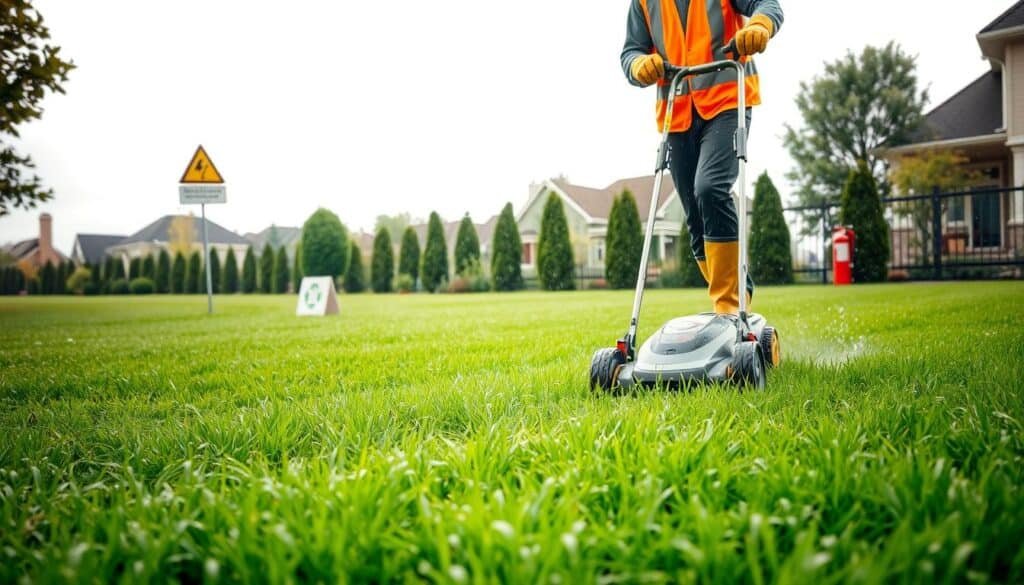
Your choice of footwear dramatically affects stability during this task. Proper traction prevents slips that could lead to serious injuries.
Protective Gear and Non-Slip Footwear
Select shoes with deep, aggressive treads designed for wet surfaces. Smooth-soled sneakers provide inadequate grip on damp turf.
Additional protective equipment includes long pants, safety glasses, and sturdy gloves. These items shield against flying debris and improve equipment control.
| Footwear Type | Traction Level | Wet Surface Safety |
|---|---|---|
| Hiking Boots | Excellent | Highly Recommended |
| Work Boots | Good | Recommended |
| Athletic Shoes | Poor | Not Recommended |
| Sandals | Dangerous | Never Use |
Maintain a firm, two-handed grip on the mower handle at all times. Avoid sudden directional changes that could cause loss of control.
Never operate corded electric mowers in damp conditions. The risk of electrical shock presents a fatal danger when water is present.
Consult your equipment manual for manufacturer-specific safety guidelines. Exercise extreme caution on slopes where wet conditions amplify risks.
Choosing the Right Mower for Wet Grass
Different mower types handle saturated grass with varying degrees of success. Selecting appropriate equipment prevents damage to both your turf and machinery. The right choice balances power, weight, and cutting efficiency.
Self-propelled models offer distinct advantages for damp conditions. These mowers reduce physical effort while maintaining steady cutting power. Their automated propulsion provides better control over uneven, slippery surfaces.
Self-Propelled vs. Gas-Powered Options
Gas-powered equipment delivers superior performance for challenging conditions. These mowers feature more powerful engines with greater torque to cut through heavy, moisture-laden grass. They resist stalling and overheating under increased loads.
Electric mowers struggle with thick, wet grass due to limited torque. Battery-powered models may bog down when facing resistance from damp blades. Corded electric versions present safety hazards in moist environments.
Weight considerations significantly impact turf protection. Heavier mowers risk soil compaction and wheel ruts on saturated ground. Always consult your owner’s manual for specific wet-weather capabilities.
Avoid using ride-on mowers on waterlogged lawns. Their substantial weight concentrates pressure, creating deep ruts that damage root systems. Choose lighter equipment when dealing with spongy, saturated soil.
How Wet Grass Affects Your Mower and Equipment
The interaction between saturated vegetation and cutting tools creates significant mechanical risks. Moisture-heavy conditions introduce multiple threats to your mower’s performance and longevity.
Wet grass clippings present immediate operational challenges. Their sticky, heavy nature causes rapid accumulation under the mower deck.
Increased Risk of Blade Clogging and Rust
Clumping occurs as damp cuttings adhere to surfaces. This buildup obstructs the blade’s rotation and discharge chute function.
The equipment must work harder against this resistance. Excessive strain on the engine leads to overheating and potential failure.
Moisture infiltration poses another serious threat. Water can seep into critical components like the fuel system.
Metal surfaces face corrosion damage from prolonged exposure. Mower blades are particularly vulnerable to rust formation.
This oxidation process degrades cutting effectiveness over time. Regular maintenance becomes essential after working with damp vegetation.
Repeated exposure to wet conditions accelerates equipment deterioration. Proper cleaning extends your mower’s operational lifespan significantly.
Mowing Techniques for Wet Grass
Successfully trimming damp turf requires completely different strategies than standard lawn maintenance. Modified cutting approaches become essential for achieving acceptable results while minimizing problems.
The fundamental principle for cutting wet grass is slow and steady wins the race. Rushing through the process increases clumping and creates uneven trimming. This approach reduces stress on equipment while ensuring more thorough cutting.
Reducing your speed allows the blade more time to process each section of vegetation. The slower pace results in cleaner, more even cuts while decreasing clumping tendencies. Your equipment experiences less strain when operating at reduced velocities.
Make frequent stops to clear accumulated clippings from the mower deck and discharge chute. Preventing buildup maintains cutting efficiency and reduces engine strain. Regular clearing prevents clogging that compromises performance.
For sloped areas, employ diagonal mowing instead of straight up-and-down patterns. This technique provides better stability and safer footing on slippery inclines. Diagonal cutting also creates more visually appealing striped patterns.
Adopting these modified techniques requires patience and additional time compared to normal maintenance. The investment prevents problems that would demand even more effort to correct later. Proper technique preserves both your landscape and equipment.
Tips for Mowing Wet Grass Effectively
Implementing strategic adjustments to your cutting approach yields better results on damp vegetation. Research from Kansas State University Extension provides valuable guidance for these challenging situations.
Adjusting Mower Height and Speed
Set your equipment to the highest cutting position available. This reduces the amount of grass being trimmed at once.
Follow the important one-third rule for healthy turf maintenance. Never remove more than the top portion of each blade during a single session.
Cutting too short creates ragged edges and excessive clumping. The equipment experiences significant strain when overloaded with wet material.
Using Side Discharge Options
Select side discharge instead of mulching or bagging modes. This method expels clippings immediately, preventing deck clogging.
Mulching attachments struggle with moisture-heavy cuttings. The sticky material cakes up inside the chamber, reducing cutting efficiency.
Bagging provides a cleaner finish but requires frequent emptying. Heavy, saturated clippings add substantial weight to the equipment.
These proven techniques minimize problems while maintaining your landscape’s health. Proper implementation ensures successful outcomes.
Dealing with Clumping and Clogging Issues
Clumping and clogging represent the most frequent frustrations when dealing with damp turf maintenance. Moisture-heavy cuttings stick together, forming dense masses that block equipment and create unsightly patches.
These adhesive clumps disrupt the cutting process and reduce quality. They also block sunlight and air circulation to the underlying turf.
Preventing Clumps and Caked Cittings
Wet grass clippings are heavy with moisture and naturally sticky. This causes them to adhere together rather than dispersing evenly.
Apply a non-stick spray to the mower deck before starting. This coating helps cuttings slide off easily instead of accumulating.
Make frequent stops to clear stubborn accumulations. Use a tool rather than hands to dislodge material safely.
Maintaining a Clean Mower Deck
Thoroughly clean the equipment before beginning any cutting. Remove dried residue that could anchor new accumulations.
Empty collection bags frequently during operation. Heavy, saturated clippings add substantial weight quickly.
This reduces strain on the machinery and prevents rut formation. Proper maintenance extends equipment lifespan significantly.
Impact of Wet Conditions on Lawn Diseases
Moisture-heavy environments dramatically increase the risk of lawn diseases. Fungal spores and pathogens thrive in damp conditions, finding the perfect environment to germinate and infect grass plants.
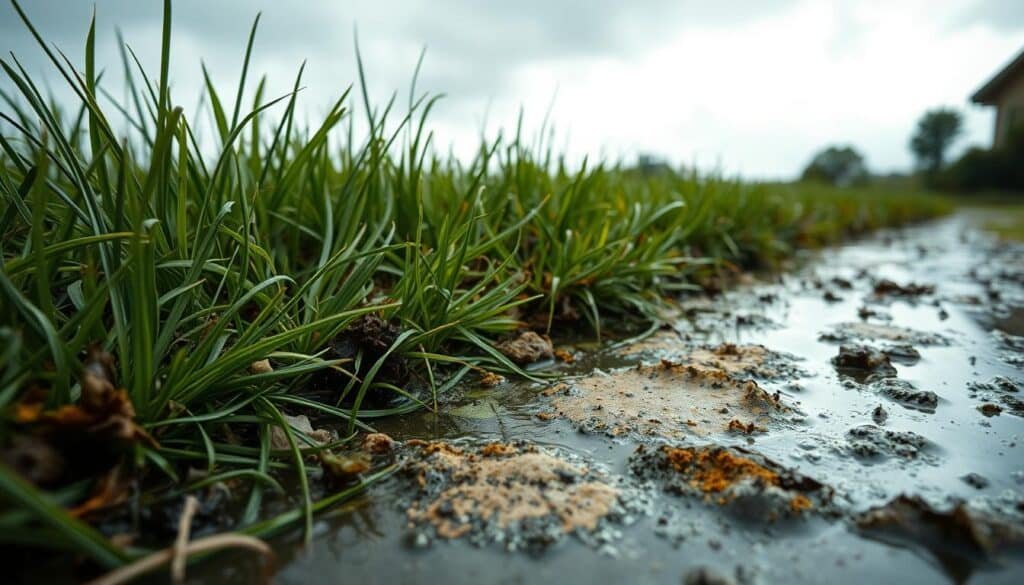
Mowing under these circumstances worsens the situation. Torn grass blades create open wounds, providing easy entry points for infections. The equipment itself can spread spores across the entire landscape.
Spotting Disease Symptoms
Homeowners should watch for specific symptoms. Early identification is key to managing outbreaks effectively.
Red thread appears as reddish-pink patches of dead grass. Dollar spot creates small, silver-dollar-sized bleached areas.
Other common issues include brown patch and rust disease. Recognizing these signs helps implement timely control measures.
| Disease Name | Primary Symptoms | Common Conditions |
|---|---|---|
| Brown Patch | Large circular brown areas | High humidity, warm temperatures |
| Dollar Spot | Small, bleached spots | Moist mornings, low nitrogen |
| Rust Disease | Orange/yellow spots on blades | Late summer, slow growth |
Minimizing the Spread of Fungal Infections
Waiting for the turf to dry is the most effective prevention strategy. This simple step prevents tearing and stops the mower from distributing spores.
If cutting damp grass is unavoidable, thorough equipment cleaning is essential. Sanitizing the mower deck and blades after use prevents cross-contamination during the next session.
Proper maintenance protects your lawn’s health and appearance. Addressing disease risks preserves the vitality of your green space.
Environmental Considerations: Soil Compaction and Drainage
Compacted earth represents one of the most damaging long-term consequences of improper turf maintenance timing. Heavy equipment pressing on saturated ground eliminates essential air spaces in the soil structure.
This compression suffocates grass roots by cutting off their oxygen supply. Roots require air pockets to breathe and thrive in healthy soil conditions.
Improving Lawn Drainage
Visible signs of soil compaction include hard, crusty surfaces and water pooling. Thin, patchy grass growth indicates underlying drainage problems.
Ruts and wheel tracks remaining after machinery use signal serious compaction issues. Proper grading ensures water flows away from problem areas rather than pooling.
Essential Aeration Techniques
Core aeration removes small plugs (2 to 4 inches) from the soil at regular intervals. This process creates channels for air, water, and nutrients to reach root zones.
Regular aeration, typically once or twice annually, prevents severe compaction. Topdressing with compost improves soil structure and enhances drainage capabilities.
Well-drained landscapes dry faster after rainfall, reducing wet conditions that lead to compaction problems. Preventive care creates resilient turf that withstands occasional necessary maintenance in damp circumstances.
Optimal Timing: Mowing After Rain and Dew
Strategic scheduling of grass trimming following moisture events protects your landscape investment. Proper timing separates successful maintenance from problematic outcomes.
Rainfall intensity determines drying periods. Light precipitation requires 2-5 hours for adequate evaporation. Heavy downpours need a full day before cutting activities.
| Weather Condition | Minimum Wait Time | Recommended Wait | Cutting Quality |
|---|---|---|---|
| Light Rain | 2 hours | 3-5 hours | Good |
| Heavy Rain | 12 hours | 24 hours | Excellent |
| Morning Dew | 1 hour | 2-3 hours | Fair |
| Light Drizzle | 1 hour | 2 hours | Good |
Morning dew creates tempting conditions for early yard work. However, damp blades still present cutting challenges. Wait for complete evaporation before starting equipment.
Mid-morning offers ideal cutting conditions. Dew has evaporated but midday heat hasn’t arrived. Late afternoon provides another excellent window after daily moisture dissipates.
A simple walk test assesses moisture levels. Traverse your property wearing standard shoes. If footwear becomes damp, postpone trimming activities.
Weather-aware planning prevents rushed decisions. Check forecasts and select dry, cool days for maintenance. Patience ensures superior results with healthier turf and safer operation.
Expert Tips and Tricks for Mowing Wet Grass
Expert approaches to damp grass maintenance focus on efficiency and damage prevention. Certain climates make waiting impractical, requiring strategic solutions.
Maximizing Mower Efficiency
Sharp blades are essential when you must mow wet grass. They create clean cuts that reduce tearing and disease risk.
Remove excess surface water before starting. Drag a garden hose across the lawn or use a soft-bristle broom to push standing moisture toward edges.
Proper preparation minimizes equipment strain. Clean the mower deck thoroughly and apply non-stick spray. Adjust to the highest cutting height for better performance.
When to Consider Professional Help
Recognize your limitations with challenging conditions. Extremely waterlogged turf or steep slopes may require expert care.
Professional lawn services handle difficult situations effectively. They possess commercial-grade equipment and specialized expertise.
This approach ensures proper grass care while preventing damage. It’s the safest option when DIY mowing poses significant risks.
How to Minimize Damage to Your Lawn and Mower
Effective damage control begins immediately following completion of grass cutting in moist conditions. Proper aftercare protects your investment and maintains equipment performance.
Post-Mowing Equipment Care
Clean all grass clippings from the mower deck while residue remains moist. Remove debris from discharge chutes and blade areas promptly.
Thorough drying prevents rust formation on metal components. Wipe surfaces clean or allow air drying before storage.
Inspect mower blades for damage after working with damp vegetation. Sharp blades ensure clean cuts and reduce equipment strain.
| Maintenance Task | Frequency | Importance Level |
|---|---|---|
| Blade Inspection | After each wet mowing | Critical |
| Deck Cleaning | Immediately after use | High |
| Component Drying | Before storage | Essential |
| Lawn Monitoring | 3-5 days after mowing | Recommended |
Monitor your landscape for signs of stress following wet grass maintenance. Look for brown tips or disease development.
Regular equipment care extends mower lifespan significantly. Proper maintenance prevents costly repairs from moisture damage.
Additional Considerations for Lawn Maintenance
Selecting appropriate turf varieties provides a proactive solution for landscapes in moisture-prone regions. This strategic approach reduces situations where property owners must mow under challenging conditions.
With over 100 turf grass types available in the U.S., homeowners can choose species naturally adapted to local moisture patterns. Proper selection significantly minimizes problems associated with damp environments.
Choosing the Right Turf for Wet Regions
Fescues and ryegrasses represent excellent choices for damp areas. These popular varieties withstand periodic waterlogging without significant damage.
Bermuda grass handles seasonal heavy rain effectively in sunny locations. However, this species struggles in shaded areas and requires full sun exposure.
St. Augustine grass offers shade tolerance while managing heavy rainfall. This makes it suitable for partially shaded yards in wet climates.
Buffalo grass stands out as one of the hardiest options available. Its deep root system enables survival through drought, cold, and wet spells.
Specialist suppliers offer seed mixes formulated specifically for problematic areas. These blends address heavy clay soils and regions with particularly wet winters.
Investing in climate-appropriate turf varieties improves overall lawn health and resilience. This foundational decision supports easier maintenance and reduces stress on both grass and equipment.
Conclusion
When faced with the challenge of maintaining your landscape after rainfall, informed choices lead to better outcomes. The decision to proceed with mowing wet grass requires careful consideration of current conditions and equipment capabilities.
Safety remains the top priority during any mowing activity. Proper footwear, equipment control, and cautious movement prevent accidents on slippery surfaces. These precautions protect both the operator and the lawn from potential harm.
Technique adjustments significantly improve results with damp vegetation. Raising the cutting height and reducing speed creates cleaner cuts. Proper timing allows the grass to dry sufficiently before maintenance begins.
Equipment care extends your mower’s lifespan despite occasional use in wet conditions. Thorough cleaning and drying prevent rust formation after working with moist grass.
Each situation demands individual assessment based on your specific lawn’s needs. Understanding these principles empowers confident decision-making when circumstances require action.
FAQ
Is it ever okay to cut wet grass?
While generally not recommended, you may need to mow wet grass if rain is persistent. If you must proceed, take extra safety precautions and adjust your mowing technique to minimize damage to your lawn and equipment.
What are the main risks of cutting wet grass?
The primary risks include personal injury from slipping on the slick surface, damage to your lawn from soil compaction and torn grass blades, and potential harm to your mower’s engine and deck from clogging and rust.
How can I tell if my lawn is too wet to mow?
Perform a simple touch test. If your shoes sink into the soil or water squeezes up around your feet, the ground is too saturated. Also, if grass blades are heavily beaded with water and drooping, it’s best to wait.
What type of mower is best for wet conditions?
A self-propelled mower with high rear-wheel traction is easier to handle on slippery terrain. Electric mowers pose a greater electrical risk, so a well-maintained gas-powered model is often a safer choice for damp grass.
How should I adjust my mowing technique for wet grass?
Raise the cutting height to reduce strain on the mower and avoid scalping the turf. Move at a slower, more deliberate pace and use a side-discharge chute instead of bagging to help prevent clumping under the deck.
How do I prevent grass clippings from clumping?
Mow when the grass is only damp, not soaking wet. Make sure your mower blades are sharp to create a clean cut, and take smaller passes, overlapping each row slightly to help disperse the clippings more evenly.
Does mowing a wet lawn spread diseases?
Yes, mowing wet grass can spread fungal spores across your lawn. If you notice signs of disease, like discolored patches, avoid mowing until the turf is completely dry to prevent the infection from spreading.
How long should I wait to mow after it rains?
Allow at least 24 to 48 hours for the grass to dry after significant rainfall. For morning dew, waiting until the sun has dried the lawn, typically by mid-morning, is sufficient.
What should I do with my mower after cutting wet grass?
Clean the mower deck thoroughly to remove all wet clippings, which can cause rust and corrosion. Allow the equipment to dry completely before storing it, and consider applying a light lubricant to the blades to protect them.